Alberta’s oilsands corporations currently produce more than four million barrels per day of bitumen, a heavy variety of crude oil that can be refined into a range of fuels and petrochemicals.
Like any large-scale industrial process, extracting the bitumen produces a large amount of waste ranging from the infamous tailings ponds, to air pollution and heavy metal deposits. But unlike most Canadian industries, the oilsands corporations have not produced a robust plan for what to do about these waste products, and governments have declined to press the issue. The waste has simply piled up, year after year, and decade after decade.
The Alberta government hopes to double bitumen production by 2035, which will also accelerate the production of this industrial waste. The oilsands corporations are long overdue to present real, substantive plans to reclaim disturbed land, treat tailings fluid, and reduce the emission of toxic gases into the air. The Alberta and federal governments are also long overdue in creating regulatory mechanisms to ensure that plans for cleanup are actually carried out.
Canada has a history of industrial toxins that have not been dealt with and have been handed over to the taxpayer ranging from the Yellowknife Giant Mineo to the Sydney Tar Ponds to orphan oil and gas wells across Alberta. What sets the oilsands apart from other Canadian environmental cleanup liabilities is the sheer scale.
After more than 20 years of operation, the area of land disturbed by oilsands mining is more than 1,160 square kilometres – more than the combined areas of Edmonton, Red Deer, Lethbridge, and Grande Prairie. Of that land, the oilsands companies have reclaimed slightly more than one square kilometre – less than a tenth of one per cent (Figure 1).
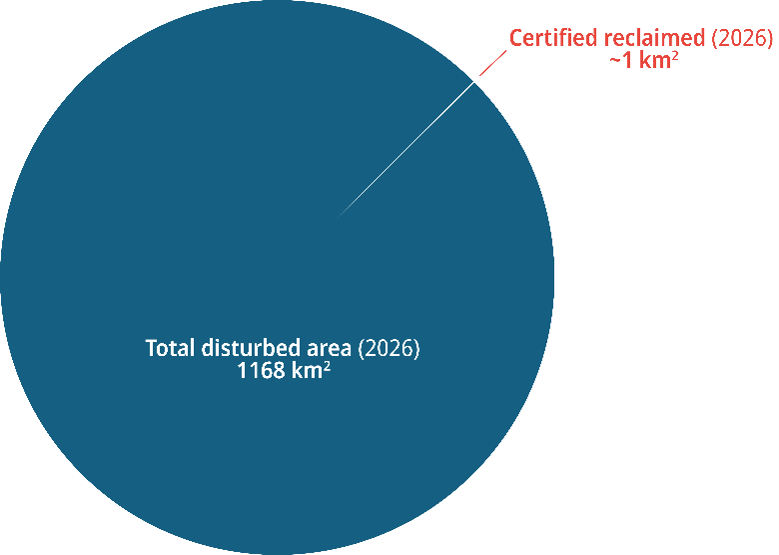
Figure 1. The area of certified land reclaimed from oilsands operations is less than one tenth of one per cent of the total land disturbed.
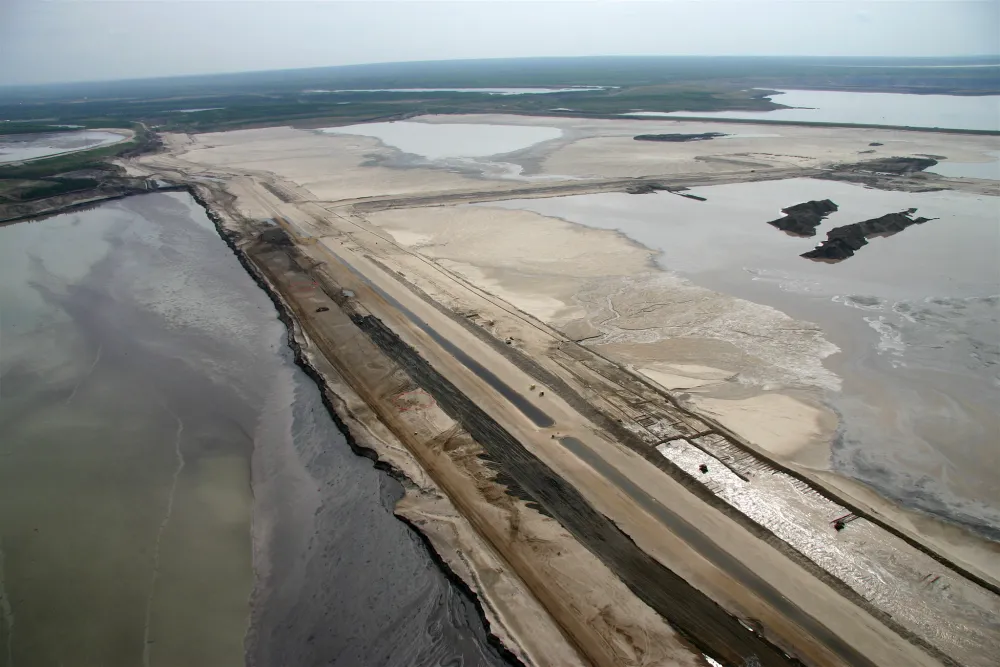
Most of the waste byproducts of oilsands mining are stored in 30 different tailings ponds, which cover 300 square kilometres (Figure 2) and contain 1.4 trillion litres of fluid – equivalent to 560,000 Olympic swimming pools. These ponds are not lined to prevent seepage into the surrounding soil. The fluid contains high levels of several toxic substances, including arsenic, lead, mercury, benzene, nickel, vanadium, chromium, selenium, naphthenic acids, phthalates, and polycyclic aromatic hydrocarbons. All of these chemicals pose real threats to the health of nearby animals and people, particularly in communities that rely on fishing, hunting, and egg gathering for a portion of their food supply.
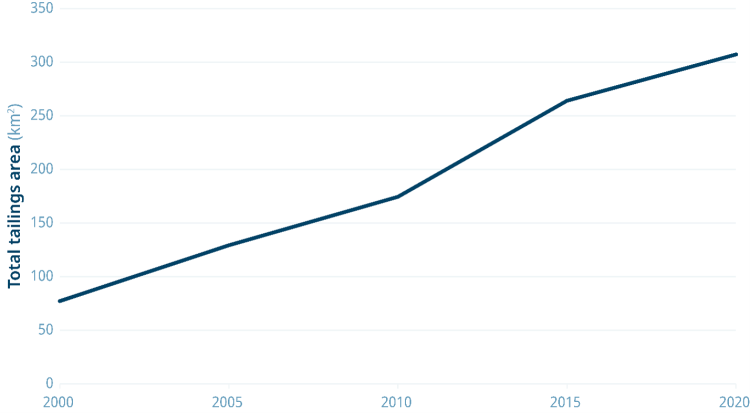
Figure 2. The total tailings area has increased by nearly 300% since 2000.
The Alberta government hopes that the oilsands companies will soon be able to treat this tailings fluid and release the treated water back into nearby rivers and lakes. But even after 20 years of operations, oilsands companies have no proven large-scale method of separating the water from the poisonous industrial waste. Alberta taxpayers are subsidizing research into this problem, but a solution doesn’t appear to be close at hand.
Nearby residents, many of whom live in First Nations and Métis communities, are also exposed to high levels of airborne pollution and dust from oilsands mining. A study from researchers at Yale University, published in the journal Science in 2024, indicated that the amount of gaseous total organic carbon released from the oilsands into the region’s airshed was 1,900 to more than 6,300 per cent higher than the levels reported by industry. The Yale researchers say the oilsands release more total organic carbon into the air than all other sources in Canada combined (Figure 3).
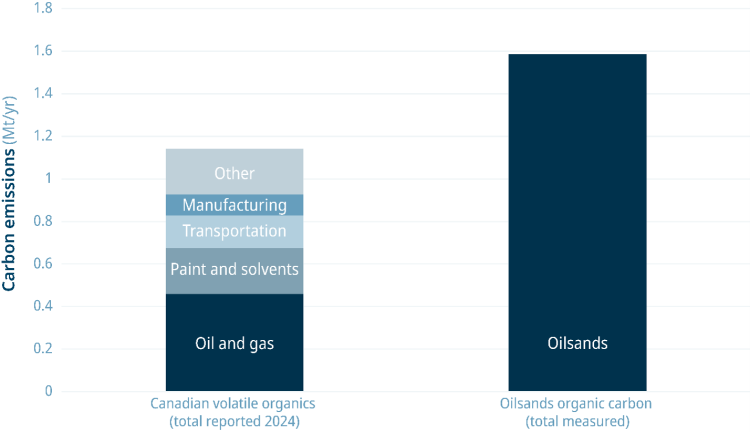
Figure 3. Measured oilsands total organic carbon emissions from the Yale study are greater than yearly emissions from all other sources in Canada (converted to carbon units).
Another study, led by researchers at the University of Toronto, reported that Fort McKay experiences dust levels above residential guidelines and above other communities in the region, as well as acute dust storm events.
According to the Fort McKay study, “while dust management plans are required, and to some extent, in place for oilsands operators, this study illustrates the need for improvement, as well as the challenges of assessing both nuisance and potential exposure when the most influential particle size fractions are not routinely monitored.”
Inadequate monitoring, reporting, and enforcement of regulations is a continuous theme in the oilsands region. In May of 2022, workers discovered a leak from a tailings pond at Imperial Oil’s Kearl mine into muskeg and forested Crown land adjacent to two rivers that provide fishing and drinking water for people living nearby. Imperial reported the leak to the Alberta Energy Regulator (AER) but neither the company nor the AER informed local communities. In January of 2023, there was a major spill that released 5.3 million litres of tailings fluid into the same area. It took four days for Imperial Oil to detect the spill, and a week to inform the public. Imperial Oil was ultimately fined only $120,000 for these violations of AER regulations. Put another way, the fine was two hundred thousandths of one percent of Imperial’s $4.8 billion in net earnings that year.
In theory, the oilsands companies are meant to put up financial security to cover the cost of the eventual cleanup of the land and water. Although conventional oil and gas wells are governed through a different system, their operators are also supposed to set aside some money for decommissioning and reclamation. Right now there are more than 7,000 orphan wells in Alberta – inactive, often leaky wells whose operators have gone out of business. Because these operators were never required to set aside enough money for reclamation, many of the associated costs land on Alberta taxpayers.
Given the absence of progress on disturbed land and tailing fluid over the past 20 years, there is no reason to believe the AER’s system for the oilsands will function any better. Across the oil and gas sector, liabilities are underestimated – but particularly in the case of oilsands mines, assets are overvalued, which has led to a program that looks like it's working while barely any financial security actually gets collected.
Unfortunately, there are precedents for allowing industry to defer their responsibilities to clean up their mess in Canada that usually end up on the Canadians’ tax bill. The Giant mine, just outside of Yellowknife in the Northwest Territories, produced more than seven million ounces of gold for various owners between 1948 and 1999. Over those 50 years the mine also produced more than 237,000 tonnes of deadly arsenic trioxide waste.
Some of this arsenic was intentionally released into the air or seeped out into the groundwater. When the last operator went into receivership, the courts transferred the mine to the Government of Canada. Nearly three decades later, much of this highly toxic waste is still stored in 15 underground chambers. The estimated cleanup cost to Canadian taxpayers is $4.3 billion.
Oilsands companies have put up a combined $4.7 billion in security for mine cleanup, which might sound pretty good. But the cost to reclaim oilsands mines was most recently estimated at $55.7 billion (Figure 4).
It’s a staggering amount of money, and the cost has only gotten bigger over the past eight years. The bill will continue to get more expensive every year, and much more if Alberta is successful in doubling bitumen production.
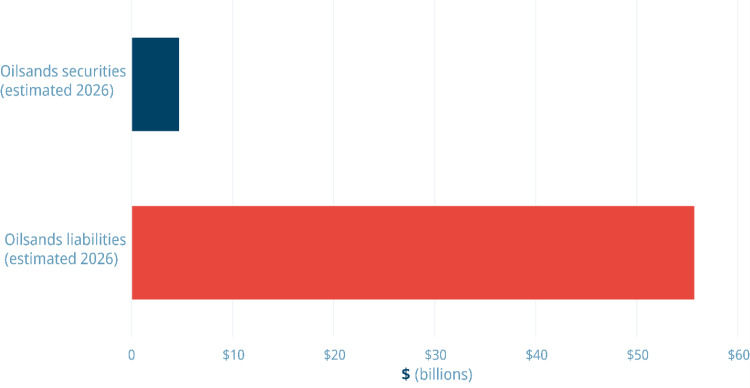
Figure 4. Oilsands mine securities in 2026 are significantly less than the estimated oilsands liabilities.
The oilsands companies are some of the most profitable and valuable companies in Canada. Now is the time for government to ensure that the industry is putting enough money aside to clean up after themselves. In the coming decades, the global energy transition will put increasing downward pressure on global oil prices. If we wait until one or more of these companies is in financial distress, it’s very likely that these immense costs will land on taxpaying Canadian families and businesses.