With COP31 ongoing in Turkey, Canada’s status as a global leader on climate is under scrutiny. Oil and gas methane emissions are among the easier opportunities to reduce greenhouse gas emissions because of the value of the gas that is conserved rather than wasted. While Canada has chosen to highlight its progress on methane, the true strength of Canadian methane policy has yet to be decided and will largely depend on Ottawa’s approach with Alberta. The federal government is currently negotiating with Alberta to determine the adequacy of its provincial regulations, and in our view, Alberta’s regulations are far from adequate.
Methane is a powerful climate lever
Methane has over 80 times the warming power of carbon dioxide in the near-term but survives in the atmosphere for only slightly more than a decade. This makes it a powerful lever in the fight against climate change. Stop emitting now, and we could mitigate near-term warming in relatively short order.
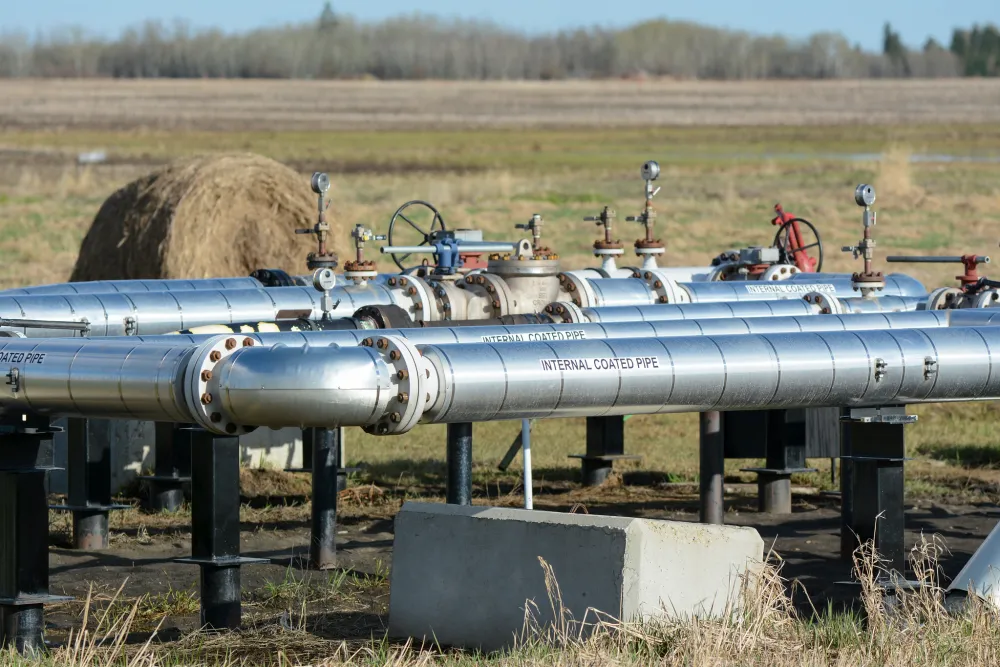
Methane is the main component of natural gas and is emitted from oil and gas systems through leaking, venting, and escaping unburned from combustion devices. Preventing emissions from oil and gas systems is cost-effective and common sensical. It means conserving gas and using or selling it, rather than letting it go to waste.
National outcomes depend on Alberta
As a result of recent backsliding on climate policy, Canada is now projected to be more than 20 years behind its 2030 greenhouse gas emissions reduction target. Canada needs climate wins. Canada’s progress to date in reducing methane emissions and the recent strengthening of the federal oil and gas methane regulations are real wins. But if the federal government allows for weak methane regulations in Alberta to stand, that progress is threatened.
Alberta is the by far the biggest emitter of oil and gas methane in the country, responsible for 67% of Canada’s oil and gas methane emissions in 2024 (compared with B.C.’s 4%). Weak regulations in Alberta would significantly undermine the integrity and effectiveness of Canadian methane policy and compromise Canada’s ability to achieve the national target of a 75% reduction in methane by 2030 (from 2012 levels).
Alberta has so far declined to step up
The Canadian Environmental Protection Act (CEPA) specifies that matters of federal jurisdiction such as methane can be regulated provincially if and only if provinces create rules that are equally effective as federal ones. If the federal government determines that a provincial regulation or set of policies will generate equal cumulative emissions reductions over some period, then the federal government can stand down its regulations for that period through what is called an equivalency agreement.
When Canada strengthened the federal oil and gas methane regulations at the end of December 2025, it meant that Alberta would either need to implement those regulations as written or strengthen its policies to meet the strength of the federal ones and seek a new equivalency agreement. The province chose to update its own regulations, but it did not materially strengthen them, it did not address the gaps in its regulations, nor did it bring its regulations remotely in line with the strength of the federal ones.
While B.C. has achieved a globally competitive methane intensity in the upstream due to strong regulations backed by measurement science, Alberta has much worse overall performance and a long way to go before it meets internationally accepted standards for environmental performance.
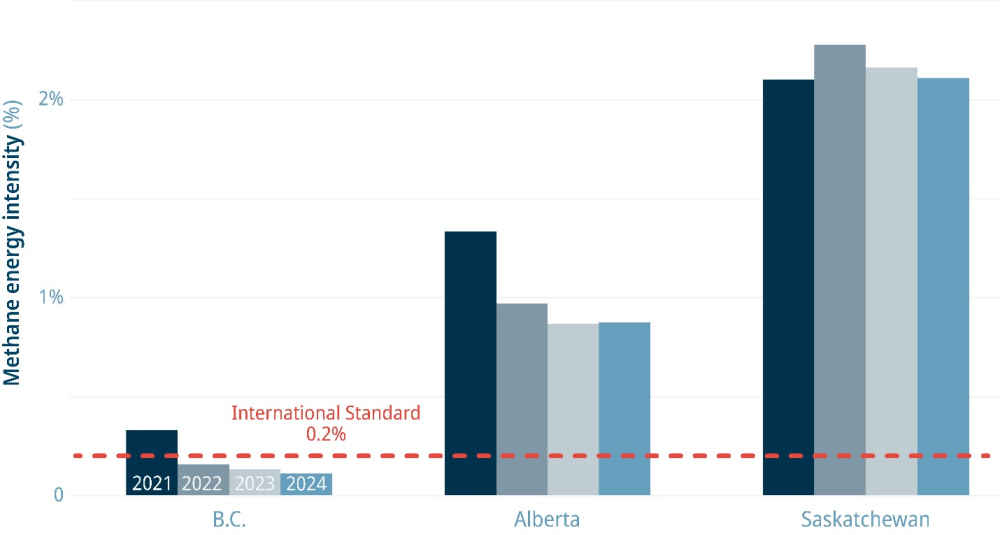
Figure 1. Upstream methane intensities across the producing provinces
Data Source: Oil and gas production data comes from the Canada Energy Regulator. 2021 Methane emissions data for B.C., Alberta, and Saskatchewan comes from Johnson (2023), Conrad (2023), and Conrad (2023) respectively. Methane data for 2022, 2023, and 2024 is taken from Environment and Climate Change Canada.
The figure above shows the methane intensities from oil and gas production in B.C., Alberta, and Saskatchewan, with the red line representing the internationally accepted standard for methane intensity. B.C. clearly falls below it, indicating strong operational efficiency, while Alberta and Saskatchewan are well above it, indicating much higher amounts of venting and leaking relative to production volumes.
Alberta’s obligations are legally defined, not politically negotiable
The Ottawa-Alberta memorandum of understanding and agreement-in-principle on methane introduced significant confusion by introducing a target for Alberta of a 75% reduction in methane emissions by 2035 – five years later than the national target. Since emissions will add up in those intervening 5 years, it’s not clear how this delayed target is consistent with the national target.
At any rate, the 2035 target cannot be taken as Alberta’s bar for equivalency. Equivalency is legally defined, not politically negotiable. The bar is equal outcomes, and Alberta’s provincial approach to methane is nowhere near equal to the federal one.
It’s time for the federal government to tell Alberta that its comparatively weak policy approach is not sufficient. And it’s time for Alberta to do its fair share. Continued progress reducing methane emissions is an achievable, short-term climate win; and, in a time of climate policy rollbacks across the country, one that the federal government should prioritize.
Canada Energy Regulator, “Energy Commodities,” modified January 5, 2024. https://www.cer-rec.gc.ca/en/data-analysis/energy-commodities/index.html
Matthew R. Johnson, Bradley M. Conrad, and David R. Tyner, “Creating Measurement-Based Oil and Gas Sector Methane Inventories Using Source-Resolved Aerial Surveys,” Communications Earth & Environment 4 (2023): Article 139. https://doi.org/10.1038/s43247-023-00769-7
Bradley M. Conrad et al., “A Measurement-Based Upstream Oil and Gas Methane Inventory for Alberta, Canada Reveals Higher Emissions and Different Sources Than Official Estimates,” Communications Earth & Environment 4 (2023). https://doi.org/10.1038/s43247-023-01081-0
Bradley M. Conrad, David R. Tyner, and Matthew R. Johnson, “The Futility of Relative Methane Reduction Targets in the Absence of Measurement-Based Inventories,” Environmental Science & Technology 57, no. 50 (2023): 21092–21103. https://doi.org/10.1021/acs.est.3c07722
Environment and Climate Change Canada, “I. Oil and Gas,” in Canada’s Official Greenhouse Gas Inventory. https://data-donnees.az.ec.gc.ca/data/substances/monitor/canada-s-offic…