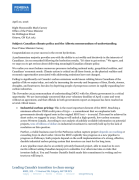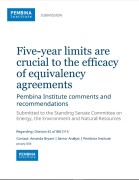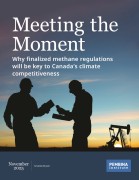
These documents are a new technical analysis and a plain language summary by the Pembina Institute that identify data and regulatory gaps relating to Alberta’s oil and gas methane emissions and provides recommendations. The objective is to demonstrate how Alberta’s regulations, reporting data, and emissions estimates can be strengthened to better track progress, evaluate compliance, and support deeper reductions.
We reviewed independent measurement studies, provincial and federal estimates, and industry-reported data, including from surveys done under the Alternative Fugitive Emissions Management Program. Our detailed findings and methodology can be found in the supplementary technical backgrounder.
Key findings
Our analysis revealed four critical gaps that must be closed if Alberta is to regain its status as a leader on methane emissions:
- Emissions data: Alberta is underestimating emissions. The federal greenhouse gas inventory, which incorporates independent measurements, estimates that Alberta’s oil and gas methane emissions are almost twice the amount indicated by Alberta’s methane model, which is based primarily on industry self-reporting. This means that the province’s claim to have met its target of reducing methane emissions 45% (from 2014 levels) by 2023, three years ahead of schedule, is not credible.
- Venting: A significant amount of venting is occurring above the province’s limit on vent volumes at oil and gas sites. Most facilities vent methane at volumes below the threshold above which metering is required, allowing them to estimate their vent volumes using flawed methods. This partly explains why measurement-informed estimates of vent volumes are five times higher than reported vent volumes.
- Separator buildings: Pneumatic controllers and pumps are a significant and under-regulated source of methane emissions in separator buildings, and the quality of reported data is poor.
- Solution gas flaring: Solution gas flaring has more than doubled in Alberta since 2019, and the removal of Alberta’s solution gas flaring limit in 2025 means policy is lacking to prevent further increases. Since a good deal of solution gas flaring is routine flaring, the elimination of the limit also puts Alberta out of step with international best practices that ban routine flaring and threatens the health of local communities.
Main recommendations
To close these gaps and regain its leadership status, we recommend Alberta do the following:
- Improve the province’s ability to credibly track and demonstrate reductions by basing estimates of oil and gas methane emissions on measurement data.
- Require top-down methods to measure methane emissions from oil and gas facilities (vehicle-based systems, aircraft, drones, or continuous monitors), in addition to the close-range methods commonly used in leak detection and repair programs, and integrate the resulting data into reporting.
- Eliminate routine venting by 2030.
- Phase out emitting pneumatics by 2030 or sooner.
- Engage diverse interest holders, including academic experts, to co-develop and improve measurement and reporting frameworks and requirements to enhance the quality and accuracy of reported data.
- Eliminate routine flaring.