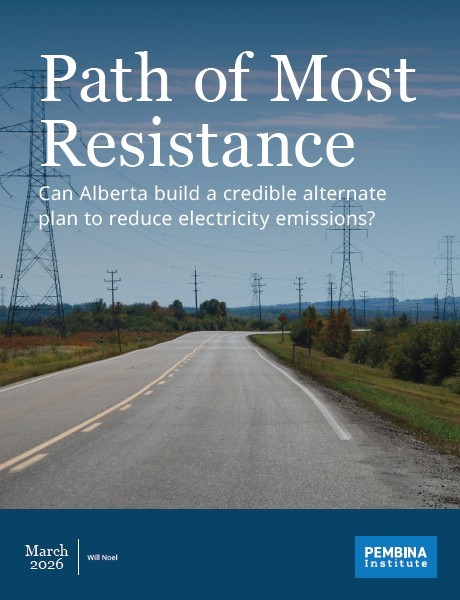
Alberta has made remarkable strides in reducing electricity emissions in the past decade, thanks to its phase out of coal-fired power plants, but it still has a long way to go to reach net-zero by 2050. Will the current memorandum of understanding (MOU) negotiations between the Alberta and federal governments build on that progress and keep the province on track? Alberta wants the federal government to agree to the long-term suspension of the Clean Electricity Regulations, which lay a path to net-zero by encouraging the development of clean, affordable and reliable energy in all provinces and territories.
But the Alberta government's plan relies on late-stage use of carbon capture and storage and nuclear energy to achieve almost all of its emissions reductions shortly before 2050. Not only will emissions accumulate faster in the interim, but given the track record of high capital cost technologies that depend on government policy and/or financing support, there is a reasonable chance that these technologies will not be deployed on time, or at all, and emissions may never come down. This is not something the federal government should accept as a replacement for Alberta’s adherence to the Clean Electricity Regulations.
Instead, Alberta should recalibrate its plan. And it should stop disincentivizing low-cost and quick-to-deploy resources such as wind and solar that can deliver emissions reductions in the near term. This would involve removing or reducing a litany of obstacles the province has placed before those technologies in the last two and a half years. Those obstacles caused a 93 per cent reduction of new wind, solar and storage installations since 2022. Restoring investor confidence is necessary, as there is no credible plan to a net-zero Alberta grid by 2050 that does not include a return to widescale deployment of wind and solar.
Our report includes:
- An explanation of the importance of cumulative emissions in the MOU negotiations
- The current state and rapid decline of Alberta's renewable energy industry
- A table that summarizes, in order of impact, the barriers to renewable energy development in Alberta
- Exploring Alberta's inadequate plan for emissions reductions, including an explanation of why depending almost entirely on carbon capture and storage and nuclear energy is not a realistic plan
- Suggested steps Alberta could take to demonstrate good faith in the MOU negotiations with the federal government