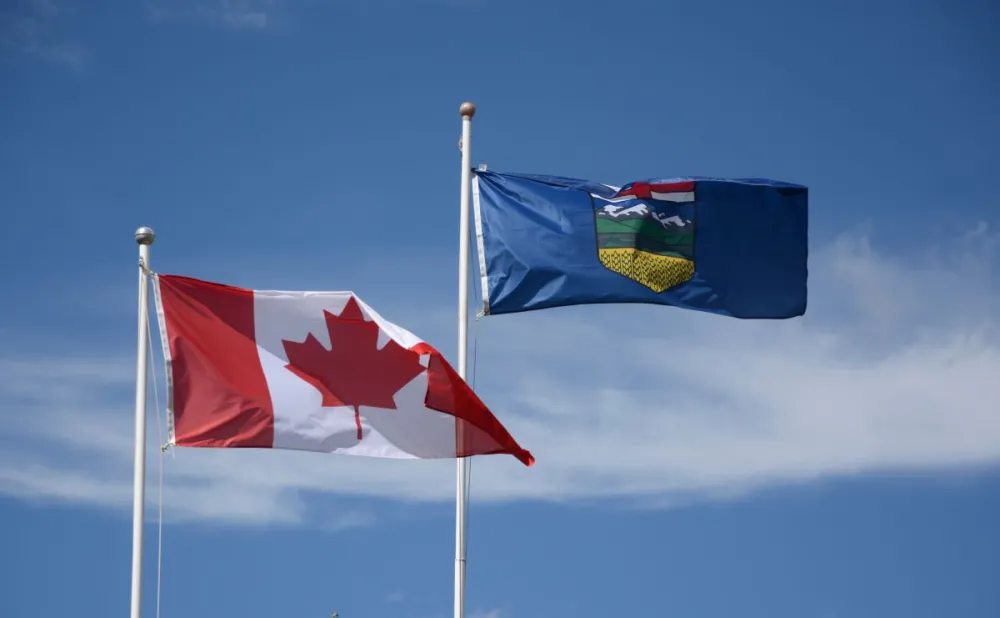
CALGARY — The Pembina Institute is releasing a list of four specific outcomes that need to emerge from the ongoing talks between Alberta and the federal government that began with the signing of a memorandum of understanding in November.
“This list is meant to help Canadians judge whether the agreements reached between Ottawa, Alberta, and industry are a fair deal for climate competitiveness,” said Chris Severson-Baker, executive director of the Pembina Institute.
“While there are definitely opportunities to reach an even better result, these four pieces are the difference between the MOU being the foundation on which successful climate policy in Canada is built, or the beginning of its unravelling.”
1. An effective carbon price of $130 by 2030
“This is the most important piece; we need carbon credits to be trading for at least $130 per tonne by 2030. A delay in reaching $130 means it will be harder for Canadian businesses to make the investments they need to cut emissions.”
2. Any new rules in Alberta must not create unfairness for industry elsewhere in Canada
“The MOU suggests Alberta is going to get a special deal on methane rules and a special deal on clean electricity, but that would be unfair for businesses across Canada. Companies should get broadly similar treatment across Canada – whether they’re fixing methane leaks at oil and gas wells, or trying to build lost-cost renewable energy projects. Alberta must show it will still achieve the same emissions outcomes, on the same timeframes as the rest of the country, so companies can confidently plan.”
3. The oilsands companies must immediately put money on the table for their Pathways Alliance carbon capture project
“Industry has been talking about this project for years, and it’s time for them to make good on it. Pathways is not a silver bullet, but it’s an important tool to reduce oilsands emissions. Taxpayers will already be paying for two-thirds of it through very generous tax credits. These very profitable companies must now show their commitment by allocating the funds.”
4. No taxpayer money for another pipeline
“Either an oil pipeline is a good business idea, or it’s not. If it is a good idea, then the private sector should be happy to invest in it. If they won’t invest, then it’s a bad idea and taxpayers shouldn’t be asked to pay for it.”
Talks between the provincial and federal governments and industry are ongoing and are expected to produce an agreement by April 1.
Quick facts
- Alberta’s industrial carbon pricing system – known as TIER – has been repeatedly undermined by the provincial government. In 2025, despite a headline carbon price of $95 per tonne (the industrial carbon price set by government), TIER credits traded at anywhere from $17 to $39 per tonne, far below the level needed to spur investment in decarbonization.
- The language of the MOU suggests that oil and gas companies in Alberta will get twice as long as companies elsewhere in Canada to reduce their methane emissions by 75 per cent below 2014. If left unchanged, this would create unfairness for oil and gas producers elsewhere in the country, notably British Columbia, which has made impressive progress in reducing methane emissions while nonetheless growing oil and gas production.
- The MOU text also indicates that the federal Clean Electricity Regulations will be placed in abeyance if Alberta can demonstrate a different path to growing its electricity supply while also achieving a net-zero emissions grid by 2050. However, Alberta’s renewable energy industry is continuing to suffer under policy uncertainty and restrictions that the province implemented after its 2023 moratorium on wind and solar development. Alberta’s electricity plans presented as part of the MOU talks must therefore be carefully evaluated to ensure the province has a viable path to achieving equivalent emissions outcomes as would have been achieved under the Clean Electricity Regulations.
[30]
Contact
Benjamin Alldritt
Senior Communications Lead, Oil & Gas, Pembina Institute
587-328-1955
Background
Report: A Not-So-Grand Bargain
Blog: No, the Ottawa-Alberta MoU is not a win on methane