
Canada’s critical minerals sector offers a historic opportunity to create sustainable jobs, strengthen energy sovereignty and build a competitive, resilient economy. With global demand for critical minerals used in clean technologies alone projected to nearly double by 2030 and triple by 2040, federal and provincial governments have identified the sector as central to Canada’s nation-building goals. Several major mining projects have recently been referred to the Major Projects Office in recognition of their strategic importance.
As demand for minerals in batteries, electric vehicles and clean technologies grows, Canada is aiming to lead across the full value chain, from extraction and processing to manufacturing and recycling.
Realizing this opportunity depends on working collaboratively with Indigenous rights holders and developing a skilled and supported workforce that can meet the demands of a rapidly expanding sector.
About the report
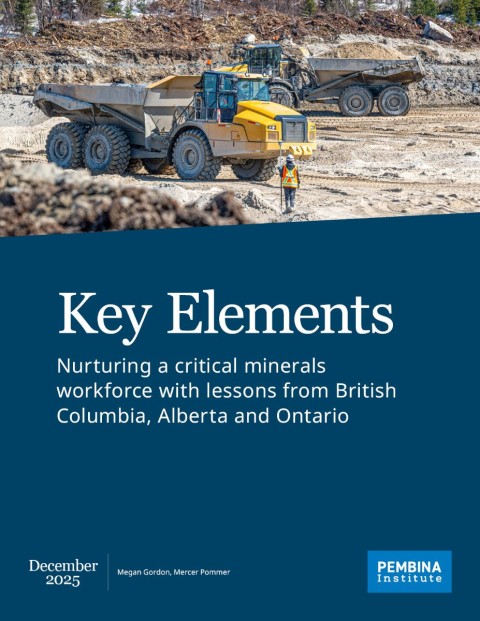
Key Elements: Nurturing a critical minerals workforce with lessons from British Columbia, Alberta and Ontario examines the current state of Canada’s critical minerals workforce and the policies shaping its future. The report:
- Assesses workforce challenges, from an aging labour force and declining enrolment in mining-related programs to barriers affecting participation, including health and safety concerns, discrimination and remote work locations.
- Analyzes the critical minerals strategies of Canada, B.C., Alberta and Ontario, focusing on how each jurisdiction approaches workforce development.
- Highlights multi-stakeholder initiatives that show how collaboration can strengthen local workforce capacity, especially for Indigenous rights holders.
In 2023, the minerals and metals sector supported 700,000 jobs, yet employers face ongoing recruitment and retention challenges, with persistent issues related to equity and mental health. No federal or provincial government has developed workforce programs specifically targeted at the critical minerals sector. Existing initiatives rely on general programs that lack the industry focus or scale needed to overcome these hurdles. Without coordinated action, workforce shortages could slow progress on projects considered nationally significant.
Key takeaways
The report finds that workforce development is most effective when it is:
- Built through sustained collaboration among governments, Indigenous nations, labour groups, post-secondary institutions and employers.
- Focused on attracting and retaining workers, with targeted efforts to address systemic barriers and improve working conditions.
- Integrated into national and provincial industrial strategies specifically for the sector and backed by stable, well-funded programs.
Promising models exist, but current efforts remain fragmented and underfunded, and national coordination remains limited — even as governments increasingly position critical minerals as a strategic priority.
Why this matters
Coordinated workforce planning is essential for Canada to get the most out of its critical minerals sector. Ensuring that workers are trained, supported and retained will see the sector deliver long-term economic and community benefits.
These findings and more are explored in detail in the full report available above.