
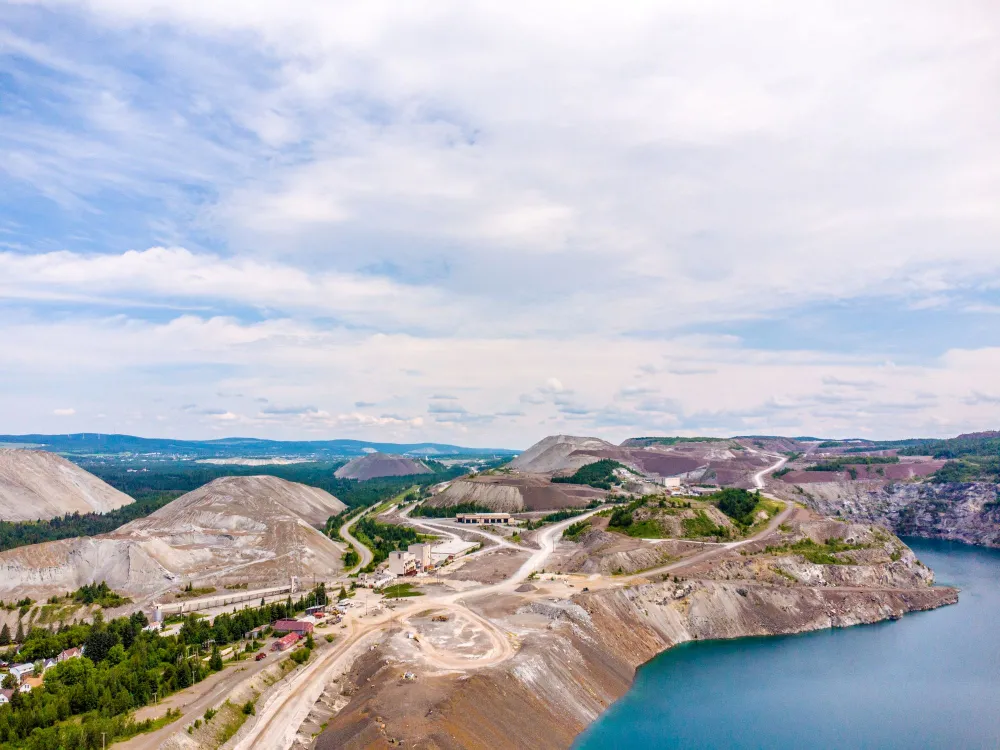
VANCOUVER, B.C. — Governments across Canada are championing critical minerals as the next great nation-building opportunity, supporting clean growth, energy security and global competitiveness. With Budget 2025 investments and new nation-building project designations highlighting the sector’s importance, Canada is positioning itself as a trusted supplier of responsibly produced minerals and value-added products.
From exploration and processing to battery manufacturing and recycling, critical minerals are the backbone of a low-carbon economy, enabling Canada to decarbonize at home and help the world do the same.
As global markets seek to diversify and build more resilient supply chains, Canada’s strong ESG (environmental, social, governance) standards, stable democracy and growing record of Indigenous partnerships further enhance its role as a reliable partner in the global critical minerals economy.
Realizing this potential depends on people as much as resources. A skilled and supported workforce is the foundation that allows Canada not only to supply critical minerals but also to build a full value-added supply chain powering the low-carbon economy – from batteries and EVs to renewable energy technologies and recycling. Ensuring workforce readiness is as urgent as advancing the sector itself.
Across Canada, planning for the critical minerals workforce has not kept pace with the sector’s momentum. Addressing challenges such as an aging workforce, declining enrollment in mining-related programs and barriers to labour participation will be key to unlocking growth. With timely, coordinated action to build skills, create pathways to high-quality careers, and align workforce development with industry expansion, Canada can turn billions in planned investment into lasting economic growth, regional opportunity and global competitiveness.
Today, the Pembina Institute is releasing Key Elements: Nurturing a critical minerals workforce with lessons from British Columbia, Alberta and Ontario, a new report that takes a closer look at Canada’s critical minerals sector and offers strategies to drive growth. The report highlights industry-led and collaborative efforts already underway in British Columbia, Alberta and Ontario. The report's clear takeaway is that Canada has an extraordinary opportunity to lead in the global critical mineral economy, but only if governments match their industrial ambition with equally strong, coordinated workforce planning. Building a ready, skilled and supported workforce will determine whether this ambition turns into lasting prosperity for workers, communities and the country.
Quotes
“Canada has a generational opportunity in critical minerals, but it centres on people as much as resources. What we see in B.C., Alberta and Ontario is that the biggest progress comes from genuine collaboration — governments, Indigenous nations, educators, labour and industry working together to build the skilled workforce this sector needs.
“Even with promising initiatives underway, efforts to grow the critical minerals workforce do not match the scale of our ambition. We can’t build a world-class sector while workers face structural barriers, from uneven access to training to the realities of remote and northern work. Canada’s success will come down to whether we invest in a skilled, supported workforce that can turn today’s critical mineral opportunities into lasting economic and climate leadership.”
— Megan Gordon, Manager, Equitable Transition, Pembina Institute
Quick facts
- In 2023, Canada’s minerals and metals sector employed 430,000 people directly and 281,000 indirectly, about 1 in 30 Canadian workers.
- Global demand for critical minerals used in clean tech alone is expected to nearly double by 2030 and triple by 2040.
- Canada has some of the world’s largest reserves of nickel, lithium, cobalt and graphite, making it one of the only western nations with abundant critical minerals.
- Of roughly 200 producing mines in Canada, 56 produce critical mineral, and in 2024, 48% of exploration spending focused on critical minerals.
- As of September 2024, 67 critical minerals projects have been proposed, representing $72.4 billion in potential investment.
- In 2022, Canada produced $8 billion in critical minerals. By 2040, annual production could grow by an additional $4 billion to $43 billion.
- Canada’s battery supply chain could contribute $5 billion to $24 billion to GDP per year through 2030 and create between 18,500 and 81,000 direct jobs.
[30]
Visit the Pembina Institute’s website to download a copy of Key Elements: Nurturing a critical minerals workforce with lessons from British Columbia, Alberta and Ontario.
Contact
Lejla Latifovic
Senior Communications Lead, Pembina Institute
819-639-4185
Background
Report: Recruit, Train, Retain: Fostering low-carbon industries through regional workforce planning