
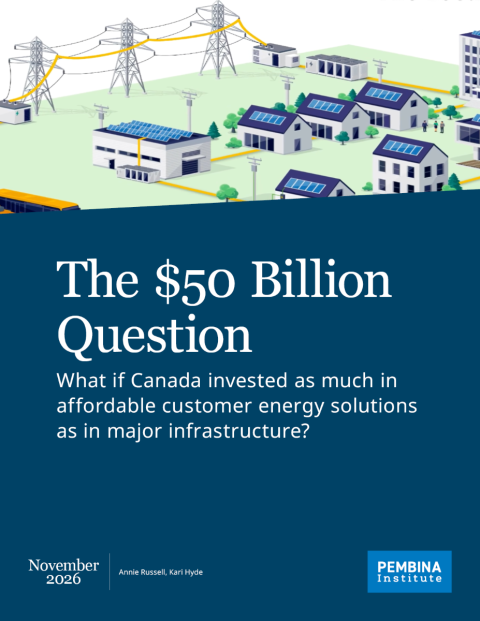
A new analysis finds that investing $50 billion in customer energy solutions, including home retrofits, heat pumps, electric vehicles, community solar and smart thermostats, could generate between $6 billion and $10 billion in annual savings for Canadian households, businesses and communities. The analysis also finds these investments could reduce emissions by up to 18.9 million tonnes per year while making electrification more affordable and helping Canada meet growing electricity demand.
At its core, every energy system consists of four parts: energy supply, transmission and transport, local distribution networks, and the productive use of energy in buildings, transportation and industry.
Using as a benchmark the potential public expenditure on infrastructure associated with the Pacific Link pipeline and electricity transmission, this report examines what a $50 billion investment in energy efficiency, load management and on-site generation could deliver in recurring savings, local economic activity and emissions reductions.
How home retrofits, heat pumps and EVs reduce energy costs
The report's first pathway evaluates a $50-billion investment in incentives for home retrofits, oil-to-heat-pump conversions, electric vehicles, community solar and smart thermostats.
The analysis finds these investments could generate $6 billion to $10 billion in direct annual savings while reducing emissions by up to 18.9 million tonnes per year once fully deployed. By lowering upfront costs, these solutions help households and businesses adopt technologies that reduce ongoing energy expenses and improve energy productivity.
The estimates do not include additional benefits such as improved health outcomes, avoided electricity system costs or the value of reducing electricity demand during peak periods.
What could a $50-billion investment in home energy affordability achieve?
The report also explores what a dedicated investment in energy affordability could mean for Canadian households. Directing $50 billion to the Canada Greener Homes Affordability Program, or similar initiatives, could provide no-cost retrofits to approximately 3.5 million low- and moderate-income households. That equates to just over $14,000 per household, on average. Eligible households could save up to $1,700 annually on energy bills, generating an estimated $1 billion to $6 billion in recurring savings every year while reducing emissions by approximately 5.3 million tonnes annually.
Why customer energy solutions matter for Canada's energy future
Customer energy solutions help optimize the demand side of the system by reducing energy waste, shifting electricity use to off-peak periods and producing energy closer to where it is consumed. Technologies such as heat pumps, electric vehicles, rooftop solar, battery storage and smart controls can be deployed in the near term to lower energy costs, improve energy security and make better use of existing electricity infrastructure. These investments can also support local jobs, strengthen communities and enhance Canada's economic competitiveness.