
Canada’s energy system is changing. Today’s business decisions are increasingly influenced by concerns related to access to security, stability and cost-effectiveness as these factors shape competitiveness, resilience, operating margins and investments.
For executive teams, this places energy as a primary consideration for where a manufacturing or process facility operates, where and how to invest capital and how to avoid or absorb disruptions. As a result, demand-side energy solutions have moved from a technical conversation happening within operations teams to a strategy conversation happening in the boardroom.
From utility cost to strategic decision-making
Demand-side energy solutions have often been treated as a line item, a cost to be managed rather than a potential lever to improve and protect business operations. However, as recently highlighted in Powering Canada Strong, Canada’s national electrification strategy, that framing no longer fits the moment.
Canada’s energy systems are changing and meeting the strategy’s goal of doubling electricity supply in Canada over the next two decades positions electricity as the backbone of the Canadian economy. Broad electrification of industry, transportation and buildings offers a platform on which affordability, resilience and economic and climate performance will ultimately be determined. As buildings, transportation and industry electrify, grid capacity and interactivity are increasingly first-order priorities rather than background infrastructure.
The scale of the shift is significant. Scaling electrification over the coming two decades to serve growth from advanced manufacturing, electrification and digital infrastructure all at once will shape our economic competitiveness for a generation. For building owners, portfolio owners, facility and fleet operators and businesses across supply chains, the practical message is that energy planning assumptions, which now more than ever includes operations electrification, need to be updated sooner rather than later.
Energy management considerations must go beyond solely addressing energy demand to consider energy supply and the flow between the two. Demand-side management (DSM), energy efficiency, distributed energy resources (DERs), local storage and demand response are cost-reduction and potential revenue-generation tools that can defer infrastructure spending, reduce system strain and improve overall grid performance. Ignoring the demand side of the equation means building more expensive energy infrastructure than needed, both at the grid and building level.
Uncertainty is the new operating environment
Building owners and operators, businesses and supply chain actors are managing more moving parts than ever. This includes volatile supply chains, long equipment lead times, slow interconnection process, as well as disruptions related to cyber risk and weather-related events.
Behind these challenges, there is good news, nonetheless. With a long history of clean electricity generation and a genuinely competitive starting point compared to peer countries, Canada has a strong foundation for growth. With the ability to deliver clean, reliable and cost-competitive electricity Canada can use low-carbon, grid interactive energy assets as an advantage to attract investment, strengthen industrial competitiveness and insulate the domestic economy from external shocks.
Demand-side solutions as risk reduction
Canadian businesses are faced with four familiar risk areas that can be viewed through an energy lens. This includes:
- Cost risk and the impact of rising energy costs on margins
- Reliability risk related to grid disruptions across the supply chain that affects operations and customer delivery
- Exposure to external, cyber, or other security risks that impact business continuity
- Transition risk that affects compliance, market access, and future competitiveness
Investing in demand-side energy solutions can address all four risk areas at the same time. Businesses can lower their electricity use and peak demands through energy efficiency measures, reduce exposure to peak conditions with the use of energy storage assets and smart controls and leverage demand response technologies to better manage energy during critical hours. Each are complementary levers that improve cost performance and resilience together.
From individual upgrades to an integrated strategy
Bringing an energy lens to operations means a shift from isolated decisions, for example looking at process systems, rooftop solar, storage and procurement individually, and towards an integrated strategy. Doing so helps owners and operators gain better control over cost volatility while improving reliability and energy security.
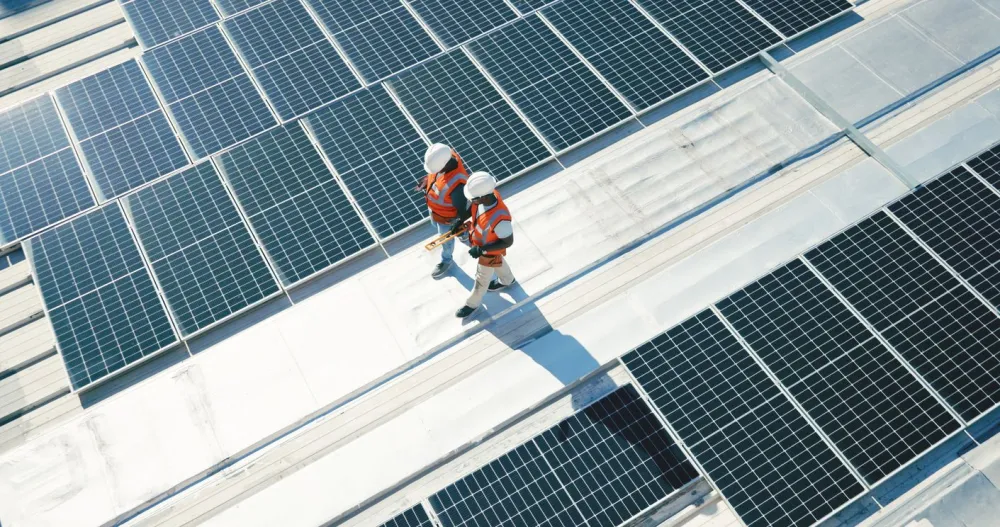
This integrated approach, the combination of distributed energy resources such as rooftop solar, battery storage, demand response, smart building controls and vehicle-to-grid capability, helps building owners and operators respond to immediate challenges and informs long-term planning.
First, owners and operators can make better use of existing infrastructure to meet rising demand and cost volatility through peak shaving and — in markets that offer time of use programs — by shifting electricity load to lower-cost periods.
Next, by taking advantage of these grid assets as a way to enhance energy flexibility to reduce their exposure to broad system disruptions, owners can build protect business operations from disruptions and improve their businesses’ resilience to extreme weather, equipment failure or cyber disruption.
Through this energy lens and integrated strategy, the case for greater energy productivity — doubling the economic value Canadians generate from each unit of energy consumed — shifts beyond energy and emissions considerations to become an essential financial and strategic approach.
No single blueprint
In practice, an integrated energy strategy is designed around how a facility operates. This means a food processor might optimize refrigeration that enables shifting cooling to lower-cost periods and add thermal storage to cut peak demand without interrupting production. An automotive or plastics plant may find its biggest opportunity in compressed air systems, motors and scheduling flexibility. And any facility with strong continuity requirements may combine batteries, smart controls and onsite solar to protect critical operations during outages.
While there are many different approaches, the value comes from matching technologies and operating strategies to the real load profile, production schedule and risk exposure of the facility.
The time is now
As policy and market signals become increasingly aligned, the role of demand-side and distributed resources rises in prominence. This is because they manage rising load at lower cost than supply-side expansion alone and support an increased focus on efficiency, electrification and industrial modernization that aligns with government and utility programs.
Moreover, as system constraints and grid expansion plans take hold, the value of flexibility will be increasingly recognized. The time is now to find ways to offset upfront costs, de-risk new technologies, and build internal capacity.
Owners and operators can position their organizations for success by identifying assets most exposed to volatile prices, peak charges, outages or grid constraints, then assess where a combined package of efficiency, controls, storage or onsite generation offers the strongest business case.
And, by bringing together all aspects of their organization, including operations, maintenance, finance and procurement, ensure energy-related upgrades decisions are considering flexibility, resilience and strategic value.
Transitions are messy, and success is rarely a straight line. There will be missteps and wrong turns. But through early action and sound strategy, success is achievable. Building owners and operators who build flexibility into their operations now will be best positioned to manage volatility, protect output, and capture the upside of a changing energy landscape.