
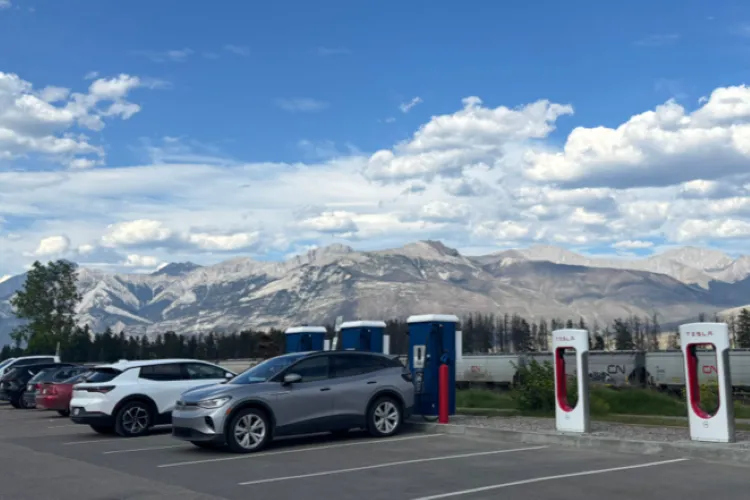
It is hard to believe that fall is upon us. Now that summer is over, I’ve had a chance to dig through some of the photos and spreadsheets I put together after my family’s road trip to B.C. in our electric vehicle (EV) this summer.
Our family has been driving EVs in Edmonton for close to a decade, so we've had a front-row seat to how quickly the vehicles and charging infrastructure have changed. This trip gave me a chance to see how far things have come and what still needs work before EV road trips feel seamless for everyone.
The trip
Our route took us from Edmonton through Kamloops and on to Vancouver Island and Ucluelet before heading home again. Total round trip: 2,804 kilometres.
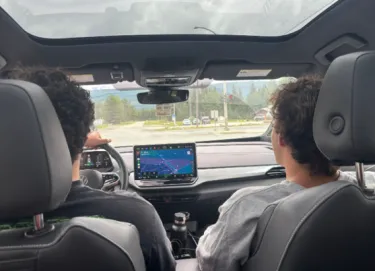
We made the trip in a Volkswagen ID.4. It wasn’t our first EV road trip, but it was our first major highway trip in a non-Tesla EV. With VW owners now able to access the Tesla Supercharger network, I was curious to see how the experience compared with what I’ve become used to after years of driving a 10-year-old Tesla.
The good: charging infrastructure has come a long way
A decade ago, planning an EV road trip took a lot of preparation and a willingness to accept some uncertainty. Today, at least on major routes through Alberta and B.C., there are far more charging options.
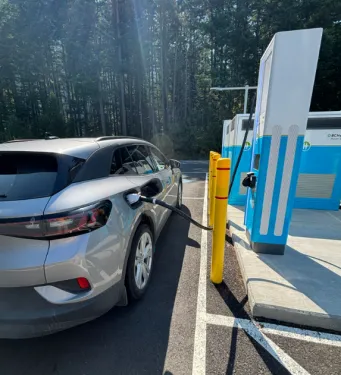
We used Tesla Superchargers frequently but also tapped into BC Hydro's growing network. In B.C., charging stations along highways were rarely more than 150 kilometres apart, and there were plenty of apps to help identify where to stop.
On longer driving days, when we covered around 700 kilometres, we typically stopped about three times to charge, for roughly 15 minutes each time. Because it was a new vehicle, we probably charged more often than necessary. On the way home, we skipped several stops we had made on the way out.
The charging experience was often less disruptive than people might expect. Many stops lined up with things we would have done anyway: coffee, lunch, washroom breaks or stretching our legs. Overall, I’d estimate we added about 30 to 40 minutes to a seven-hour driving day.
At no point was I was worried about running out of charge.
The medium: road-trip charging isn't as cheap as charging at home
One of the big benefits of owning an EV is how much cheaper it is to charge than to buy gas or diesel. At home, the savings can be substantial. For someone driving 20,000 kilometres a year, Natural Resources Canada data suggests an EV can save $2,000 a year in fuel costs.
Road trips are different.
Fast charging costs more because drivers are paying for expensive equipment, electricity and the convenience of charging quickly while travelling. During our trip, we paid an average of about $0.40 per kilowatt-hour, with prices ranging from roughly $0.33 to $0.59 depending on the network, location and even time of day.
We spent $280 on electricity for the 2,804-kilometre trip.
So how does that compare with gas?
I calculated what the trip would have cost in a similarly sized gas SUV getting about 8 L/100 km on the highway. Over 2,804 kilometres, that vehicle would use roughly 224 litres of fuel. At an average price of $1.80 per litre, that works out to just over $400.
So, the ID.4 saved us roughly $125 in energy costs, or about 30%.
It’s meaningful, although nowhere near the fuel savings I see when charging at home, where my charging costs are about 75% lower.
The fixable: software is still a weak link
The biggest challenge we encountered wasn’t battery range or driving comfort. It was the VW software and the number of different apps we needed to make the trip work. At various points, I found myself switching between five different apps: Better Route Planner (ABRP), PlugShare, BC Hydro EV, ChargePoint and The Tesla App.
Together they created a workable, if not patchy system. Most drivers don’t wish to become experts in charging networks, memberships and route planning. They just want to get where they’re going.
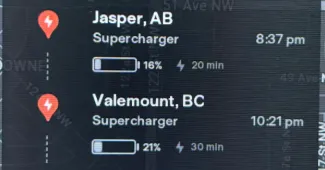
This is where Tesla still has an advantage. The software built into all its cars handles trip planning for you. It knows where you need to charge, how long you need to charge and adjusts the route based on things like terrain, temperature and energy use.
It’s seamless. Other automakers have some catching up to do. That became particularly obvious when we hit the mountains.
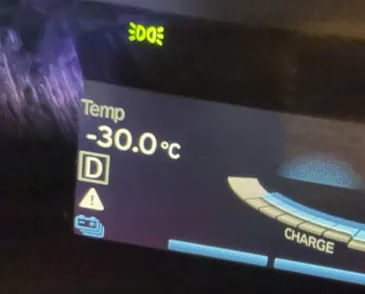
Driving across the Prairies is relatively straightforward; even in -30°C, you learn quickly how your car uses energy. Mountain passes are another story.
Climbing thousands of metres can send energy consumption up quickly, while descending gives some of that energy back through regenerative braking.
Even after more than a decade of driving EVs, I found myself checking multiple apps and comparing estimates just to be sure we’d arrive with plenty of range to spare. That shouldn’t be necessary.
Range estimates need to better reflect real-world driving, including highway speeds, temperature and terrain. Many EV dashboards still base range on standard EPA rating, which many not reflect actual driving. There is an opportunity for governments to set standards so that new vehicles sold in Canada give drivers more useful information about their actual expected range, so drivers can focus on the journey, not range anxiety.
EVs are ready. The experience still needs work.
If someone had asked me ten years ago whether EVs were ready for family road trips, I would have said no.
Today, the answer is clearly yes.
On our 2,804-kilometre journey, we spent 109 minutes charging on the way out and 75 minutes on the way home. Compared with how we likely would have travelled in a gas vehicle, I calculated that the EV added about 30 minutes of travel time per day, which is not nothing (although, in hindsight, we stopped more than we needed to), but it’s a reasonable trade-off for not having to worry about rising gas prices every time we hit the road.
The biggest takeaway from this trip is that the remaining challenges are no longer about the vehicles themselves. Long-range batteries are common, newer EVs can charge much faster than the cars we were driving a decade ago and the charging network has expanded dramatically.
What still needs work is everything around the car: better software, a more seamless charging experience and a fast-charging network that extends beyond major corridors. Policy has a role to play here, too.
Policy has a role to play in making sure Canadians have access to more EVs at different price points in the first place. Clear, predictable policies that support EV uptake would give automakers a clear reason to bring more models and more affordable options to our dealerships.
After a decade of driving EVs, I’m convinced they’re ready for the same kinds of driving as gas vehicles, including long road trips. There are still things to fix, but the vehicles can do the job.
Now we need to make sure the supporting infrastructure and policies are ready too, so they can be ready for everybody.