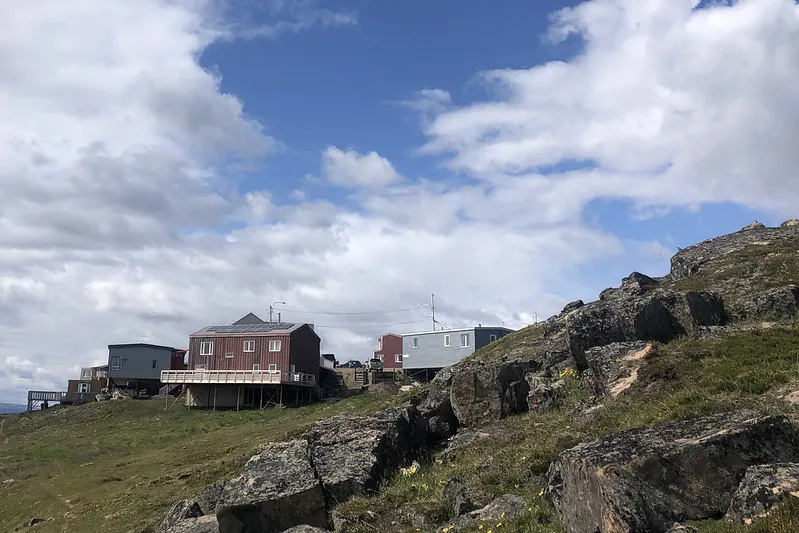
In many rural and remote Indigenous communities, the buildings that matter most are often the ones under the greatest strain. These buildings – including schools, arenas, daycare centres, and supportive care homes – provide critical services to community members, families, businesses, and government.
Many of these buildings, however, are decades old and in need of urgent repair and modernization. Addressing these needs is a critical component of Canada’s clean energy transition: retrofits, and in particular, deep retrofits – in other words, upgrading and improving a building to be as energy efficient as possible.
Enter: Energy InSites, an innovative Indigenous led capacity building and retrofit implementation program designed and delivered by the Centre for Indigenous Environmental Resources (CIER). The program supports Indigenous communities in Alberta, Saskatchewan, Yukon, Northwest Territories, Nunavut, and Manitoba. Since 2024, Energy InSites has been tailored to deliver wraparound support to Indigenous clean energy leaders who are doing the important work of improving their community buildings, one retrofit at a time.
Energy InSites: How does it work?
Energy InSites is a structured energy efficiency program designed to support Indigenous communities with the tools and information they need to upgrade, or retrofit community buildings.
Working with its technical partner, Indigenous owned The LEAP Group, the Energy InSites program is designed to follow four steps:
Step 1: Energy audits
Participating communities work with technical experts to understand current building performance through an on-the-ground energy assessment exercise. This includes conducting energy audits using thermal imaging, drone footage, 3D scans, and more.
Step 2: Retrofit design projects
In collaboration with community staff, the project team designs retrofit projects to improve building performance with the goal of reducing energy consumption and emissions, and improving building sustainability.
Step 3: Funding and financing support
Community partners receive support from CIER and LEAP as they identify and apply for long-term financing and funding for their community’s projects.
Step 4: Capacity-building
Community partners and other community staff receive support, mentorship, and structured capacity-building opportunities through the program.
What makes Energy InSites different?
We sat down with one of the program administrators at CIER, Brent Martel, and Kiauna Cote, a youth energy champion in the program, to learn more about how the program operates and what makes its approach so unique.
Community-centric approach
“Every community’s situation is different and highly variable. We have some communities that have whole energy departments and full-time staff. But then there are other communities that don’t have that same capacity or experience and are looking for support and guidance. Our work is designed to support all this variation.” – Brent Martel, Senior Project Manager, Energy InSites
Indigenous communities are geographically, economically, and socially distinct. For the transition to clean energy and for the specific work of deep retrofits, this means the program must be nimble, adaptable, and open to the specific circumstances of every community.
Energy InSites is structured to be adaptable – each community is supported with the information and tools required to meet their specific needs and excel as energy leaders. In practice, this means the program implementation is guided by community partners, and CIER tailors the four-step process based on local insights and perspectives on community objectives and experiences.
This approach ensures that communities can create projects that meaningfully meet their priorities.
Building community capacity
“Suddenly, the one maintenance person in the community has less of a burden on their shoulders because more people have information and skills needed to address longstanding issues with community infrastructure.” – Brent Martel, Senior Project Manager, Energy InSites
Energy InSites also includes capacity-building and training to ensure that community partners have the skills they need to lead and manage their projects long into the future.
Through the program, community staff are supported with critical skills and information that can ensure the longevity and replicability of their projects in other areas. Tangibly, this includes skills required for energy audits, building upgrades, and information about funding and financing for ongoing work.
For small communities, this support is especially important because many are looking to build the fundamental knowledge, training, and skillsets to take on new projects.
With locally focused capacity building available, communities can benefit from access to experts who help guide the process and ensure that local leaders and staff have the information and resources needed to accomplish their goals in the long term.
The Indigenous Youth Energy Champion Accelerator
“I feel like I can confidently say that I can understand where I play a role in this industry now. This work has helped me understand the importance and impact of energy efficiency in my community, but it also taught me about the importance of local leadership and its role in creating sustainable homes and buildings.” - Kiauna Cote, youth energy champion
As part of the Energy InSites program, youth are also invited to participate in a capacity building program called the Indigenous Youth Energy Champion Accelerator (IYECA). Through the program, Indigenous youth aged 18 to 30 are invited to learn about building retrofits, energy efficiency, energy sovereignty and leadership over the course of six months. During the program, IYECA participants are supported with group and one-on-one mentorship and education on climate change and energy from a land stewardship approach.
This is an especially unique element of the program considering the role young people already play in managing and supporting community priorities and advancing sustainable decision making. This training prepares future and current leaders who are likely to be tasked with managing key community priorities – including building maintenance, energy systems management, and more – in the coming years.
Program outcomes
- 29 communities impacted (meaning either participating or through individual mentorship through IYECA)
- 200 + community buildings audited
- 35+ funding applications, amounting to 40 million dollars in funding requested, for community projects
- 21 community energy jobs created to lead the program at community level, 19 of which are youth
- 16 jobs created within CIER and LEAP to deliver the Energy InSites program
Takeaways
“My hope is for everyone to have this type of knowledge and the opportunity to learn because the default doesn’t need to be the status quo… it’s really important to listen to young people and give them opportunities to learn and grow.” – Kiauna Cote, youth energy champion
Canada has big infrastructure goals and climate ambitions, but achieving these goals to benefit of all will depend on meaningfully engaging and working with local leaders who can turn vision into action. CIER’s Energy InSite’s program offers one powerful example of how this can be done effectively.
Grounded in partnership and community leadership, the program is enabling Indigenous-led infrastructure improvements and climate initiatives that reflect local priorities, needs, and values and help strengthen their communities in the process. More broadly, it underscores the importance of community-informed program design in overcoming unique barriers and creating energy and local infrastructure solutions that are tailored to the distinct circumstances of each community.
As Canada works toward a more sustainable and resilient future, an approach like Energy InSites offers a compelling model for ensuring that climate and infrastructure investments deliver lasting, community-driven impact.
“Through local leadership and decision-making, we have an opportunity to rebuild and repair. This is where reconciliation comes in. It’s about honouring the fact that, as Indigenous People, we are decision makers. We are rightsholders, and we have authority to govern ourselves and make decisions for our own communities.” – Kiauna Cote, youth energy champion
Editor’s note: Some quotes used in this blog have been edited for clarity and brevity.