
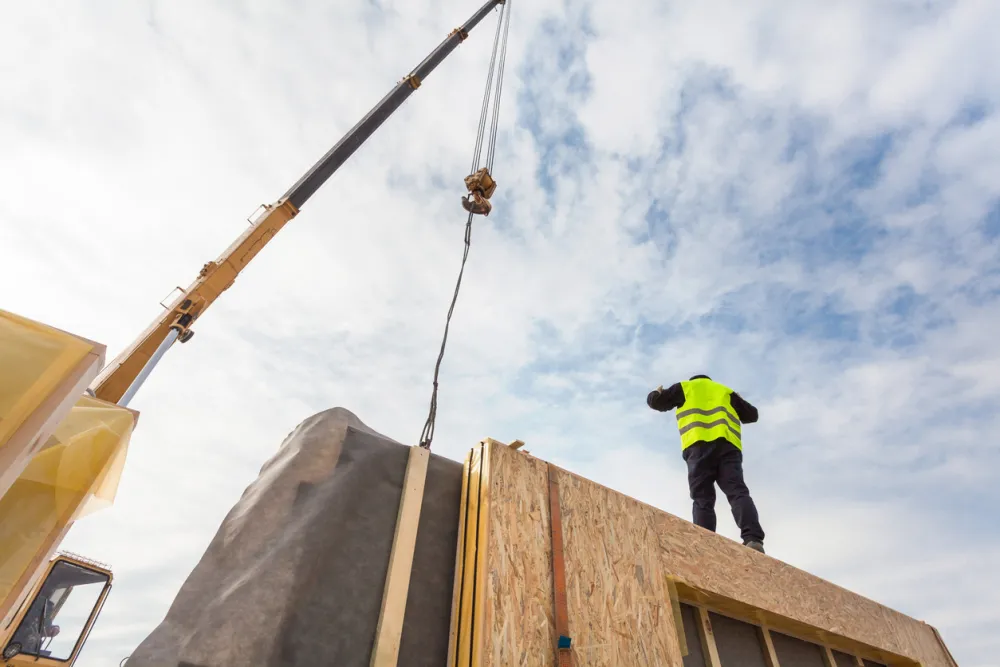
Canada has two urgent housing jobs: build more affordable homes and preserve existing ones. Yet, we often assume they must be addressed separately when there is an opportunity for us to tackle them together.
The Government of Canada has already sought to address the need for greater scale in new housing quickly through the establishment of Build Canada Homes (BCH), which recently became a Crown corporation. Its mandate is to build affordable housing and leverage the market to catalyze the adoption of Modern Methods of Construction (MMC) by increasing the use of factory-built and prefabricated construction. As BCH is still in its early stages, there is an opportunity to explicitly include whole-building retrofits in its mandate. New construction and retrofits are not identical, but they rely on many of the same foundations such as off-site manufacturing, skilled workers, early coordination and a steady pipeline of projects. Bringing them together could support both the construction of new affordable homes and preservation of existing ones.
Why prefabrication still matters for retrofits
A few years ago, the Dutch EnergieSprong model drew significant interest in Canada as a way to deliver high-performance retrofits at scale using off-site manufactured panels and building components.
The benefits that generated this early interest still hold today. Prefabrication can shorten on-site construction and reduce noise, dust, and exposure to hazardous materials for occupants. This is particularly relevant to social and affordable housing, where residents are often more vulnerable to disruption, including temporary or long-term displacement. On the workforce side, factory production provides safer, more consistent working conditions with less exposure to weather. Prefabrication offered a streamlined, repeatable delivery model that could be scaled nationwide, and for a sector where no two projects are ever quite the same, this was an exciting proposition.
Over the years this optimism has become more measured as implementation barriers became clear. It turns out that the challenges encountered are less about the effectiveness of the technology in theory and more about how it fits with the true workings of our existing buildings, and its compatibility with current industry practices and the broader market.
Findings from the Reframed Initiative point to four recurring barriers.
1. Unknown building conditions make precision more difficult
At the building level, precision remains a challenge. Despite detailed surveys and precision scanning, photogrammetry and other methods, existing buildings can often contain undocumented renovations, hidden conditions or dimensional inconsistencies that only become apparent during construction. When components are manufactured to precise dimensions, even small discrepancies or minor changes can trigger on-site modifications, which increases risk, time, cost and disruption.
Recommendation: Better building records, early investigations, and realistic contingencies can reduce this risk, even if they cannot remove it completely.
2. Panelization needs earlier coordination and clearer risk-sharing
The success of prefabricated panels depends on early coordination between design, manufacturing and installation. Collaborative and integrated delivery models can bring the right expertise into a project early to address considerations such as site logistics and constructability. Without this early coordination, the risk of change orders can increase significantly, driving up costs and extending timelines and, in extreme cases, halting a project altogether. However, the use of such models in the industry remains limited.
Panelized retrofits also require more financial commitment earlier in the project. Panels may need to be designed and ordered, and factory time reserved, before funding and permits are fully secured. If the project is delayed, redesigned or cancelled, the owner, contractor or supplier may be left with the cost of early work and materials that cannot be reused. Current procurement and contract structures do not always make clear how these risks and costs should be shared or how the parties taking them on will be compensated.
Recommendation: Procurement processes can encourage and incentivize collaborative models that bring designers, fabricators, contractors, and installers together early. Contracts can clearly state how early design and production risks will be shared.
3. Limited industry experience raises costs and risk
Canada still has a limited pool of professionals with experience designing, manufacturing, and installing prefabricated retrofit systems. This can limit supplier options, increase costs and leave project teams learning as they go. Building owners and non-profit operators continue to have limited skills and capacity internally to manage such projects and make informed decisions. Delays and uncertainty within the supply chain can reduce some of the time and cost savings prefabrication is meant to provide.
Recommendation: Joint efforts from government and industry can help close this gap through training, capacity-building, and knowledge sharing between projects.
4. Without a steady pipeline, costs remain high
Cost remains one of the greatest barriers to adoption. Prefabrication and panelized retrofits can become more economical, and the significant facility start up costs more attractive, when manufacturers can rely on a steady pipeline of similar projects. Canada’s retrofit market has not yet reached that scale, creating a cycle in which limited demand and uncertainty keep costs high, while high costs make it harder to build demand. Individual projects cannot break this cycle on their own.
Recommendation: Build Canada Homes could help break this cycle by extending its focus on modern methods of construction to include prefabricated whole-building retrofits alongside new construction. There is an opportunity to work with housing providers to group similar buildings into larger retrofit portfolios, creating steadier demand for manufacturers while spreading design, production, and logistics costs across more projects. This added demand could also give manufacturers greater confidence to invest in the facilities and workforce needed to serve both retrofit and new construction industry. While this would not solve every challenge, it could create stronger market conditions that help both sectors scale and become more self-sustaining over time.
Scaling for the future
The benefits of panelization still hold, but realizing them at scale will require funding, procurement practices, market conditions, and industry capacity that better align with how the technology works. By extending Canada's investment in MMC to existing buildings, we can strengthen the sector to build new affordable housing while preserving the homes we already have.
Related resources
Article: Retrofit investments are nation building
Primer: Prefabricated panels and deep retrofits