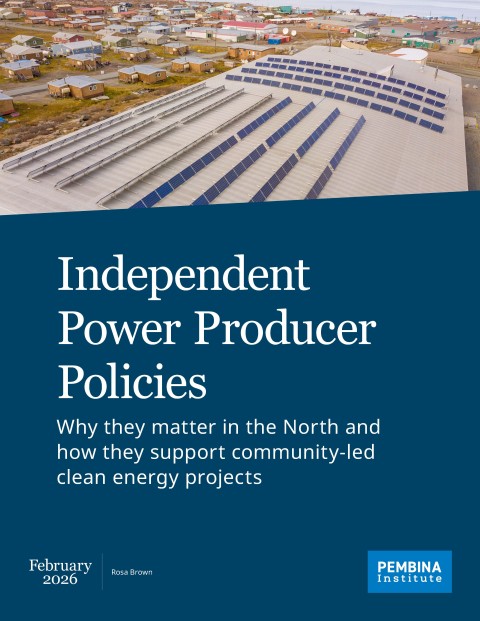
Across the territories (Northwest Territories, Nunavut, and the Yukon), communities, governments, and industry are increasingly looking to renewable energy for energy security, emissions reductions, and greater economic opportunities.
To achieve this outcome, local leaders, utilities, and government often benefit from “independent power producer policies” to ensure that local clean energy projects are built on a foundation of transparency, trust, and collaboration.
This document provides an overview of typical IPP policies and how they have been applied in diesel-dependent communities across Canada. It is intended to support community energy leaders, governments, and utilities as they navigate and advocate for IPP policies to promote local infrastructure development, reconciliation, and diesel reduction.
Read the document to learn more about:
- What an IPP policy is
- What an IPP policy accomplishes
- Why these policies matter in the North
- Key elements of an IPP policy
Throughout the resource, we offer examples, definitions, and explanations of how IPP policies work in the North.