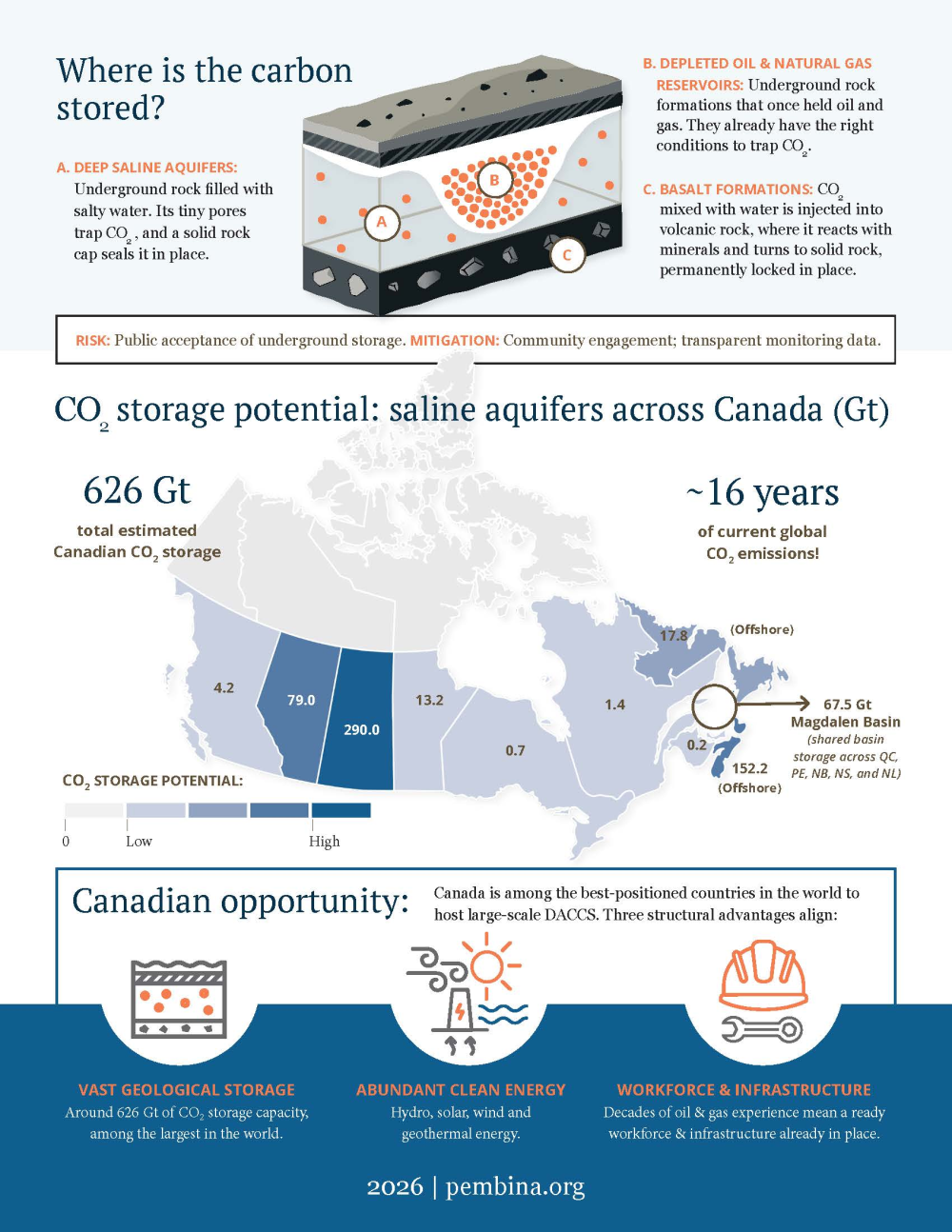
Canada sits on enough underground storage space to hold ~16 years of current global CO2 emissions.
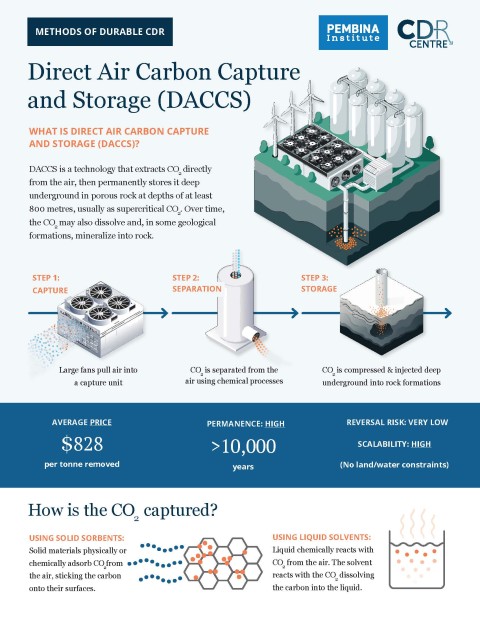
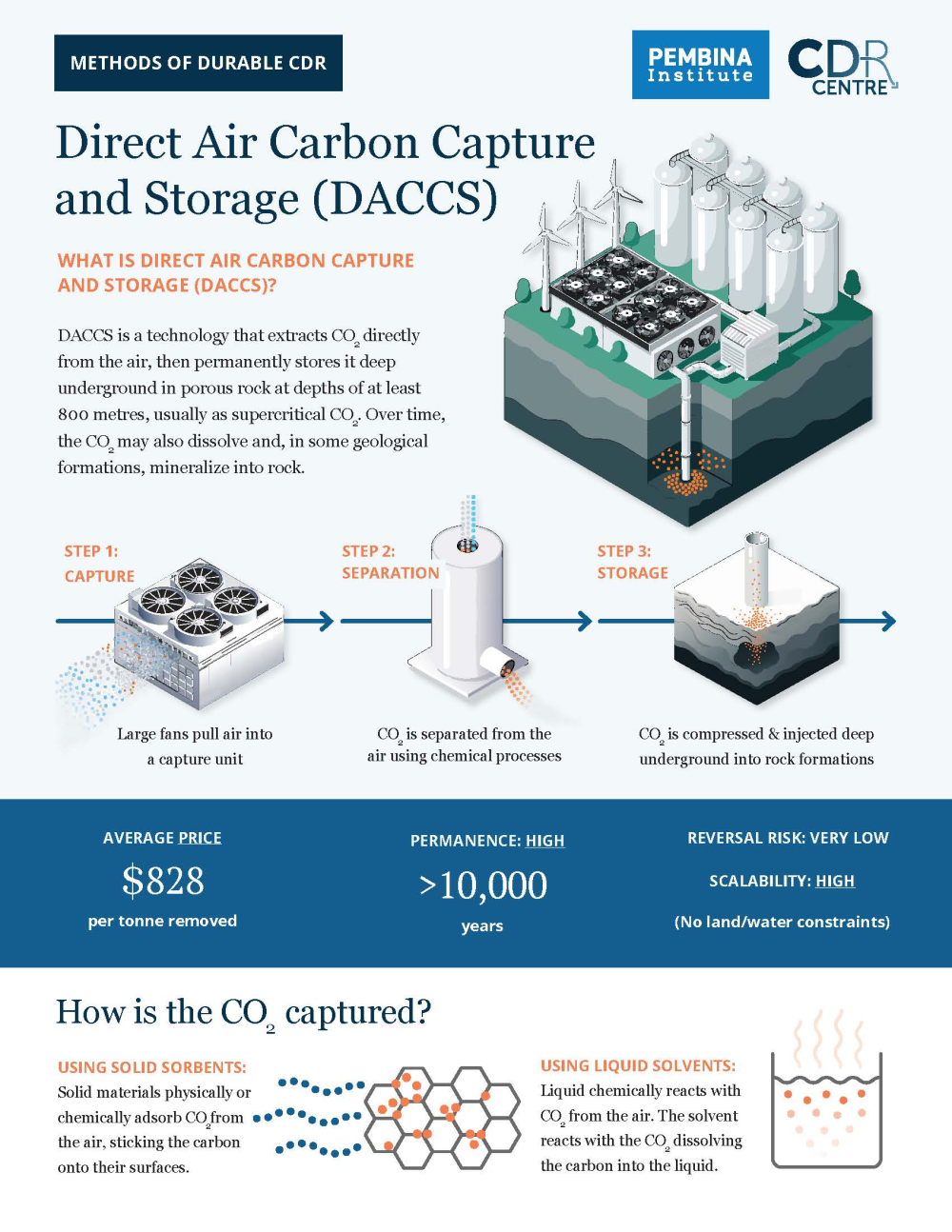
From the CDR Centre, this infographic explains how direct air carbon capture and storage (DACCS) works, from capturing CO2 with large fans, to separating it using chemical processes, to injecting it deep underground for permanent storage.
It outlines the main storage options, including saline aquifers, depleted oil and gas reservoirs, and basalt formations.
It also maps an estimated 626 gigatonnes of storage potential across the country, and covers cost, permanence, and scalability.
Together, these show why Canada is well positioned to host large-scale DACCS.
Find out more in our infographic below.
Image
Image