
Corporate climate commitments have matured over the past decade, but the tools most companies rely on are showing their limits. Traditional carbon credits face rising scrutiny from regulators, investors and civil society, and the approaching net-zero deadline has exposed a problem that avoidance and reduction crediting cannot solve: some emissions will remain.
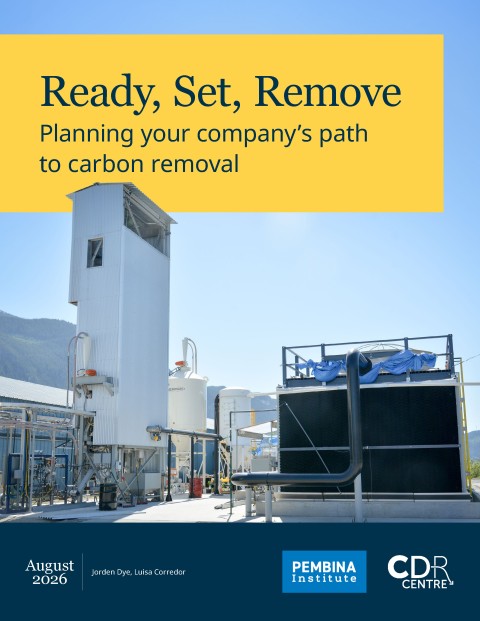
Carbon dioxide removal is the mechanism built to address that gap. Ready, Set, Remove is a primer for corporations and sustainability teams asking whether carbon removal belongs in their strategy, and what it would take to get started.
The report explains how high-durability removal credits differ from the avoidance, reduction and nature-based credits that have dominated the voluntary market, and what separates a high-quality removal from a questionable one. It sets out where CDR fits within a corporate sustainability strategy, the sequencing that gives a removal plan credibility, and the advantages available to companies that engage before requirements arrive.
It also makes the case for Canada as a place to buy. With 626.2 gigatonnes of geological storage potential, a 60 per cent investment tax credit for direct air capture, provincial storage regulations already in place, and a growing ecosystem of developers and support organizations, Canadian conditions are difficult to match elsewhere.
The primer closes with a readiness checklist. Most organizations are further along than they assume.