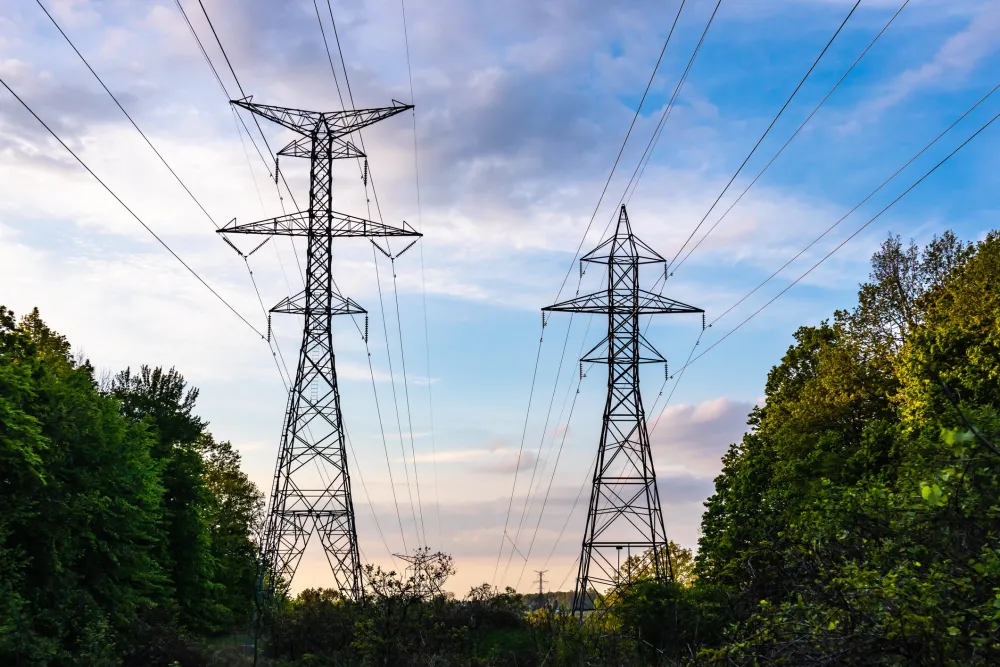
A quiet, but potentially historic, breakthrough for Canada’s economic future happened this month. While news cycles have been consumed by Iran and its effects on geopolitics, global security and — ironically — fossil fuel markets, the majority of Canada’s provinces and territories announced their formal intentions to collaborate on building electricity infrastructure to better connect the country’s currently fragmented grids.
Following the announcement, two prominent ministers with responsibility for their respective electricity portfolios — Stephen Lecce of Ontario and Nathan Neudorf of Alberta — were in the media emphasizing the critical importance of building more electricity infrastructure to take advantage of the rapidly electrifying global economy. If they can pull this off, it will be a nation-building move that strengthens energy security, lowers household costs and puts Canada on the path to being a true energy superpower in the 21st century.
Those of us who study Canada’s electricity supply have long known the country would benefit enormously from the construction of more interprovincial/territorial wires. Right now, we share more electricity with the US than we do with each other (we can ship 27 gigawatts south, versus 17 GW across Canada). But because each province controls its own electricity system, the motivation was never quite strong enough to overcome political roadblocks, especially given the US market was often larger and more lucrative.
Now the world has changed in two key ways.
First, economic risks posed by an unpredictable US has sparked a Team Canada attitude — one we must capitalize on to get big things built — and provinces are quickly realizing that should include electricity wires.
That’s because of the second thing that’s changed: electricity demand is about to grow rapidly, everywhere. Governments are seeing forecasts and realizing they’re on the cusp of needing a lot more electricity to power transportation, homes and industry in the years ahead. Naturally, they need that electricity to be reliable and low-cost.
The provinces already have abundant, low-carbon electricity resources, but linking them together supercharges their various strengths. Hydroelectricity, which makes up almost two-thirds of Canada’s supply, is usually easy to store and call upon when needed. You can let the water build up behind the dam if other cheaper electricity options are available and release it when demand for power is high. But hydro capacity is not unlimited and can be subject to droughts, so hydro-rich provinces still need other options.
Nuclear plants produce large amounts of energy, but do not quickly power up or down to follow how much electricity an individual market needs. Meanwhile, wind and solar have become very low-cost in recent years and can be built and scaled so quickly that in 2025 they dethroned coal as the world’s largest source of electricity. But, as everyone knows, their output varies across the day and by season.
Batteries have come of age and are giving grid operators additional tools to manage renewables, but bigger and better-connected markets would be able to do even more. For example, BC and Manitoba, with their extensive hydropower assets, are perfect partners for their neighbouring Prairie provinces’ low-cost wind and solar resources.
The Canadian Climate Institute recently found that a transition to clean energy — both in terms of supply and use, such as by electric vehicles — will result in 12 per cent lower average energy costs for Canadians in 2050. Without more wires that allow provinces to draw on each other’s cheapest forms of electricity, we won’t fully seize those affordability benefits. What’s more, parts of the country will remain overly reliant on volatile fossil fuels for power generation and markets to the south, both of which have proven to be vulnerable to geopolitical shocks.
We’ll know this partnership agreement is more than just a current of goodwill when provinces and territories open their electricity markets to each other, and real transmission projects are being proposed. Hopefully the folks at the Major Projects Office are ready to seize this nation-building, investment-attracting opportunity.
The federal government can help solidify this pivotal moment via its upcoming Electricity Strategy, most critically, by funding some transmission buildout, ensuring First Nations are meaningfully at the table, speeding up permitting processes and doing its part to increase the uptake of electrified energy resources on the consumer side, with things like heat pump and EV charging rollouts.
Make no mistake, this won’t be quick. Canadians will need to encourage successive governments to stick with it. But the pendulum on clean electricity investment has already swung globally, and once we start reorienting our energy system towards low-cost, clean electricity supply and use, a snowball effect of jobs, investment and affordability benefits will follow.