
Canada is embarking on one of the most ambitious nation-building projects in its history by building the electricity system needed to power a modern economy.
The federal government’s announced electricity strategy framework recognizes a simple but important reality: Affordable, reliable and abundant electricity — and the electrification of our lives and industries — is essential to Canada's economic future. Whether it is supporting the energy needs of a growing population, processing critical minerals or powering AI, electricity is increasingly the foundation of economic resilience.
Building this future will require new and expanded power sources, transmission, storage and technologies. It represents an opportunity to strengthen Canada’s economic competitiveness, improve energy security and reduce greenhouse gas emissions. But infrastructure alone will not determine whether the strategy succeeds.
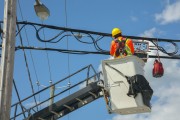
The workers who build, operate and maintain Canada’s electricity system are as critical as the infrastructure itself. If Canada wants an electricity strategy that delivers lasting prosperity, workers and communities must be at the centre from the start.
The federal government is right to focus on expanding electricity infrastructure, increasing energy efficiency and promoting electrification in transportation, buildings and industry. New projects can create thousands of jobs in the skilled trades, operations and maintenance and STEM occupations, as well as jobs across the value chain, such as manufacturing and transportation. According to Electricity Human Resources Canada, the electricity sector will require 28,000 new workers by 2028, and up to 130,000 workers between now and 2050 under a net-zero scenario.
But the labour market alone will not automatically sync with the occupation and skill requirements to fulfill this ambition. Canada already faces labour shortages in many sectors, and demand for electricians, powerline technicians, engineers, heavy equipment operators, millwrights and other skilled tradespeople is expected to grow significantly in the years ahead, particularly as a significant share of trade workers are set to retire. And the challenge is not only finding enough workers. It is ensuring that investments in workforce development deliver the skills needed for Canada’s electricity strategy, creating good jobs with clear long-term careers attached and economic opportunities and local benefits for communities and regions where these projects will take place.
This is where the federal government’s Sustainable Jobs Act comes in. Passed in 2024, the legislation established important principles for Canada's economic transition, including decent work, social dialogue, inclusion and regional fairness. These principles should guide the implementation of the electricity strategy just as they guide other areas of industrial development.
A successful electricity strategy should include an implementation plan that helps promote and preserve high job quality standards already evident in much of the industry. Public investments should create good, unionized jobs with benefits, opportunities for apprenticeship and training and pathways to long-term careers to support Canadians through challenging economic circumstances and higher costs of living. Where feasible, public investments should be tied to project labour or community benefit agreements. These investments should also ensure equity-deserving groups, local communities and Indigenous peoples are given a fair chance at jobs where systemic barriers may have historically hampered their participation.
Electrification can also strengthen domestic industries and create jobs across value chains. The electricity strategy identifies a growing need for equipment and technologies such as transformers, semiconductors and batteries. Meeting this demand represents a significant opportunity to expand Canadian manufacturing, which creates spin-off jobs. But without clear industrial policies or calls for domestic content, Canada risks importing much of the equipment needed to build its future electricity system.
The strategy must also be connected to workforce development efforts already underway. Earlier this year, the federal government announced a $6-billion commitment to recruit, train and hire workers in the skilled trades. This investment has the potential to help address labour shortages and open doors for a new generation of workers. But training programs alone are not enough.
Workers need confidence that good jobs will exist when training is complete. Communities need assurance that major investments will generate local economic benefits. And employers need a coordinated workforce strategy that aligns training, recruitment and hiring with actual project demand. Existing training and development resources can be strategically allocated to align energy system shifts and workforce development planning.
Canada's electricity future will be built by skilled workers in every region of the country. The federal strategy framework represents an important step toward a cleaner, more competitive and more secure future. For Canada to maximize the benefits of electrification, we must do more than build infrastructure. Instead, we must build careers and strengthen communities.
Chris Severson-Baker is executive director of the Pembina Institute. Sari Sairanen is executive assistant to the Secretary Treasurer of Unifor National. Both of them serve as directors of BlueGreen Canada.