

CALGARY — Canada's energy investment decisions today will shape household costs, business competitiveness and electricity affordability for decades to come. As governments invest in the infrastructure needed to power Canada's future, a new report highlights how customer energy solutions can help Canadians save billions in energy costs every year while supporting affordable electrification and a more efficient electricity system.
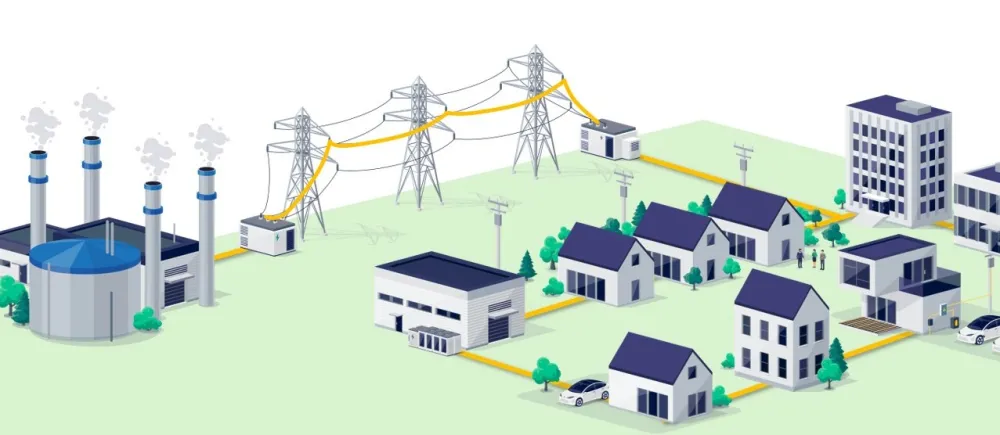
At its core, every energy system consists of four parts: energy supply, transmission and transport, local distribution networks, and the productive use of energy in buildings, transportation and industry. Using as a benchmark the potential public expenditure on infrastructure associated with the Pacific Link pipeline and electricity transmission, The $50 Billion Question: What if Canada invested as much in affordable customer energy solutions as in major infrastructure? examines what a $50 billion investment in energy efficiency, load management and on-site generation could deliver in recurring savings, local economic activity and emissions reductions.
Pathway 1: Allocating $50 billion in incentives across home retrofits, oil-to-heat-pump conversions, electric vehicles, community solar and smart thermostats generates an estimated $6 to $10 billion in direct annual savings for households, businesses and communities, while reducing emissions up to 18.9 million tonnes per year once deployed.
These investments unlock day-to-day savings by reducing the upfront cost of technologies and upgrades for households and businesses while providing local jobs and building Canada’s retrofit sector. Importantly, these estimates do not include broader savings such as health benefits and potential electricity system savings that can result when customers are enabled to reduce demand during constrained periods on the electricity grid or provide dependable local energy supply.
Pathway 2: The report also illustrates what targeted investment in home energy affordability could achieve. Directing $50 billion to the Canada Greener Homes Affordability Program or similar initiatives could provide no-cost retrofits to approximately 3.5 million low- and moderate-income households. Eligible households could save up to $1,700 every year on energy costs, generating roughly $1 billion to $6 billion in recurring savings each year while reducing emissions by approximately 5.3 million tonnes per year.
At a time of economic uncertainty and growing electricity demand, customer energy solutions offer a practical pathway to affordability, energy security and economic resilience. Technologies such as heat pumps, electric vehicles, rooftop solar, battery storage and smart controls can be deployed in the near term, helping households and businesses reduce energy costs while improving energy productivity and making better use of existing electricity infrastructure. Investments in these solutions can also support local jobs, strengthen communities and contribute to a more competitive and sovereign Canadian economy.
Quotes
"Canadians want energy solutions that lower costs, strengthen energy security and create economic opportunity at home. Our analysis shows that customer energy solutions can do all three while making electrification more affordable for households, businesses and communities."
— Kari Hyde, Director, Customer Energy Solutions, Pembina Institute
Quick facts
- A $50 billion investment in customer energy solutions could generate $6.1-$10.0 billion in annual savings for Canadian households and businesses.
- Directing $50 billion to the Canada Greener Homes Affordability Program or similar initiatives could provide no-cost retrofits to approximately 3.5 million low- and moderate-income households. That is equivalent to just over $14,000 per household.
- Eligible households could save $300-$1,700 annually on energy bills, under the CGHAP expanded program recommendation.
- Household retrofit investments could generate $1-$6 billion in recurring annual energy-cost savings.
- A household retrofit investment could reduce emissions by approximately 5.3 million tonnes annually.
- A broader customer energy portfolio could reduce emissions by 15.4-18.9 million tonnes annually.
Emissions reductions from the broader portfolio could create an estimated $5.1-$7.7 billion in annual societal benefits through avoided climate damages.
Related resources
Media release: Federal budget puts Canada on a stronger path toward electrification
Op-ed: For a more affordable Canada, optimize electricity demand while building new supply
Media release: Federal heat pump strategy will help cut energy costs, build electricity system
Op-ed: The clean energy transition needs a rulebook
Report: Demand as a Utility Resource
Report: Beyond the Meter: Harnessing demand-side management to power Alberta's energy future
[30]
Contact
Sarah Snowdon
Senior Comms Lead, Pembina Institute
647-797-9329