
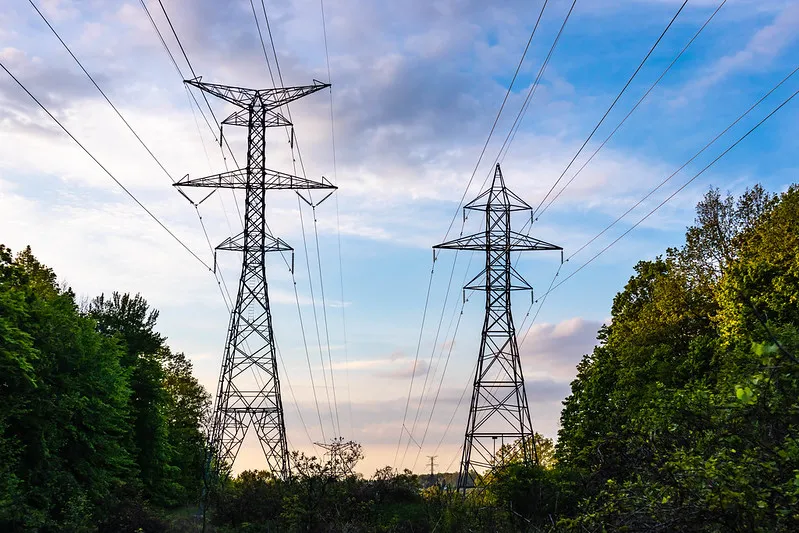
EDMONTON — Tim Weis, Senior Director, Industrial Decarbonization at the Pembina Institute, made the following statement following the First Ministers’ announcement to advance the buildout of electricity infrastructure between provinces.
“Recent commitment by Canada's First Ministers to advance electricity interties is an encouraging step toward building a stronger and more integrated Canadian electricity grid. These efforts – as the U.S. tariff threat looms large once again – underscore the urgent case for connecting provincial and territorial grids, not only to build economic resilience, but also to meet our fast-growing electricity needs as consumers and industry rely increasingly on electric vehicles, heat pumps and more.
"This announcement – on the heels of an encouraging MOU signed by the maritime provinces – includes a commitment by premiers to complete pre-development work on interties by July 2027. These are meaningful first steps, but the real test will come in the months ahead as ministers work together to remove the long-standing funding, regulatory, and market challenges that currently stand in the way of more affordable, reliable, and clean electricity.
Building interties is one of the clearest opportunities Canada has to reduce exposure to an increasingly volatile U.S. market
"As premiers advance their collaborative efforts, we highlight the critical and urgent task ahead and reiterate that building interties is one of the clearest opportunities Canada has to reduce exposure to an increasingly volatile U.S. market, create stronger interprovincial ties, and, crucially, deliver affordable and reliable electricity as demand quickly rises. We look forward to learning more as provinces approach the July 2027 milestone and the federal government advances its electrification strategy through Budget 2026.”
Quick Facts
- Electricity interconnections benefit the affordability, reliability and energy security of an electricity system by enabling electricity to be shared more effectively.
- Canada currently has much more electricity interconnection capacity with the U.S. (27 gigawatts) than connections between provinces and territories (17 GW).
- Each Canadian province and territory manages its own electricity system, so interconnections between provinces require specific agreements around cost and benefit allocations. This has been one of the major barriers to building more interconnections previously.
Background: Recent progress on Canadian interties
- In March 2026, ten provinces and territories signed on to a first-of-its-kind National Energy Corridor agreement, initiated by Ontario, to advance new transmission infrastructure and strategic interties across Canada.
- The federal electrification strategy, released in May, sets a vision to: scale up the use of electricity across the economy through electrification of homes, transportation and industry; double electricity supply to support that growth; and build a more modernized, connected Canadian grid.
- In June, the federal government announced five intertie projects to be prioritized to support national security, reliability, and affordability across Canada – Alberta-B.C., B.C.-Yukon, Alberta-Saskatchewan, Saskatchewan-Manitoba, and Prince Edward Island-New Brunswick.
- On July 4, the federal government announced $4.2 million in funding to the Western Transmission Catalysts initiative to expand interprovincial transmission across B.C., Alberta, Saskatchewan and Manitoba. This project will include research, capacity-building activities, and bring together various stakeholders to address implementation challenges to interprovincial transmission development.
- On July 23, The Prince Edward Island-New Brunswick intertie expansion received $5.9 million under the Smart Renewables and Electrification Pathways Program (SREPs) to build two 200 MW sub-sea cables, upgrade transmission lines, and modernize substations in both provinces.
- New Brunswick, Nova Scotia and Prince Edward Island signed a Memorandum of Understanding on July 23 to explore greater regional cooperation on electricity systems in the Maritimes. Partnering with Natural Resources Canada, they will identify opportunities for collaboration on electricity generation, transmission, demand-side management and emerging energy resources.
- The First Ministers statement, released July 23, emphasized their commitment for increased collaboration between First Ministers, and provinces and territories, on implementing electricity interties, strategic partnerships, and affordable electricity.
Contact
Bhan Gatkuoth
Senior Communications Lead
587-742-0818
Background
Submission: Powering Up an Electrification Strategy for Canada
Op-ed: This Team Canada approach to electricity will help build the economy we need
Media release: Announcement of five priority intertie projects latest major step forward in building resilient, low-cost Canadian electricity system