CALGARY — Alberta taxpayers are getting stuck with tens of millions of dollars’ worth of costs from bad actors in the oil and gas sector, according to a new report from the Pembina Institute: Unpaid Bills: How Albertans are shouldering the costs for oil and gas companies
“Companies are legally required to close and clean up oil and gas wells when they are done producing,” said Janetta McKenzie, author of the report and director of the oil and gas program at the Pembina Institute, “but weak rules have allowed too many operators to delay the work, avoid the cost, or walk away entirely.”
Rural landowners bear the brunt of the physical consequences such as obstacles to agricultural work and toxic contamination of the nearby soil, water, and air. But all Alberta taxpayers are at risk of being stuck with the financial mess left behind by irresponsible companies.
Operators are required to pay rent for the land their machinery and roads occupy. But if the company doesn’t pay, the provincial government picks up the bill. Since 2014, Alberta taxpayers have paid out $145 million to landowners in compensation for unpaid rents.
Some companies simply refuse to pay their municipal property taxes, even when they’re still in operation. This shifts the cost burden for municipal services onto law-abiding families and businesses. The energy sector’s total of unpaid municipal tax bills is approximately $250 million.
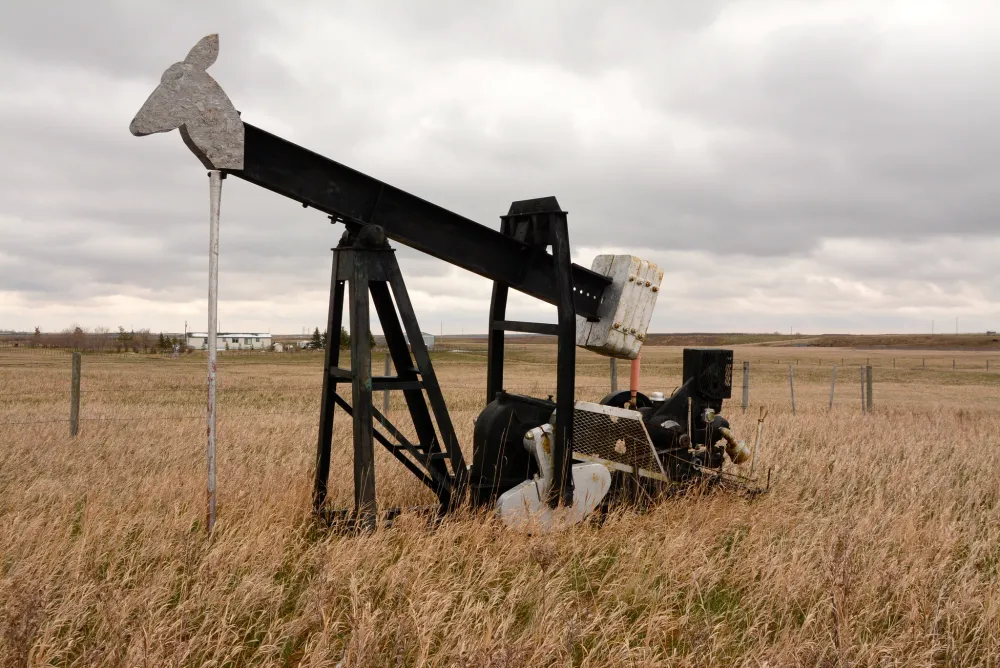
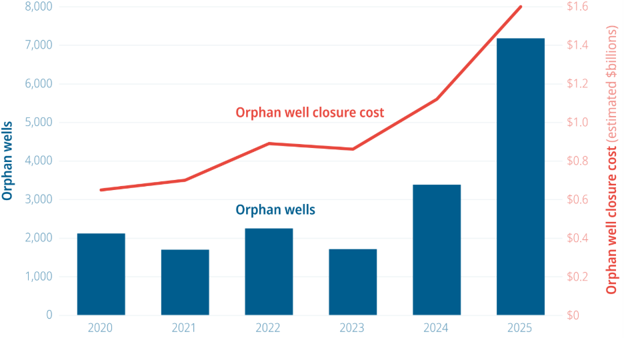
When companies go out of business, they often leave behind orphan wells – these wellheads aren’t producing anything useful, but there’s no-one left to pay for their decommissioning and reclamation. This is a large and long-standing problem in Alberta.
“This isn’t just about the mistakes of the past,” McKenzie said. “Of the 7,000 or so orphan wells in the province, more than half of them were orphaned this year.”
The total liability for conventional oil and gas wells is estimated to be $36.6 billion, and that figure leaps above $60 billion if you include the cost of decommissioning old pipelines.
Roughly $1.6 billion of that work would be on orphan wells. Another $844 million’s worth of oil and gas equipment is at risk of orphaning in the near-term.
While the oil and gas industry pays an annual levy to support the Orphan Well Association’s decommissioning work, the levy is tiny compared to the volume of work ahead – just $144.5 million this year. Some of the OWA’s funding also comes from government loans: $330 million from the provincial government, and another $200 million from the federal government.
“If you live in the city, this problem can seem a long way away,” McKenzie said. “But it’s only as far away as your next paycheque. Some of the taxes deducted from your income every month are being used to compensate farmers for unpaid rent and support struggling rural municipalities.
“Every tax dollar the provincial and federal governments spend on these problems — all of which the oil and gas companies are legally responsible for — is a dollar that's not available to hire a nurse or build a school or fix the highway.”
As the global energy transition accelerates, more oil and gas operators will find themselves in financial distress. Alberta needs to act now to protect taxpayers from piling up more unpaid bills from failed companies.
These actions include:
- firm deadlines for closing old wells, backed with enforcement
- transparent public estimates of cleanup costs
- enough money set aside up front to cover closure even if the company goes bankrupt
- stronger enforcement for unpaid bills
- tougher rules to stop high-risk companies from taking on more wells they may never clean up or pay for.
These policy solutions are explored in detail in the Pembina Institute policy paper No Well Left Behind.
Contact
Benjamin Alldritt
Senior Communications Lead, Oil & Gas
587-328-1955