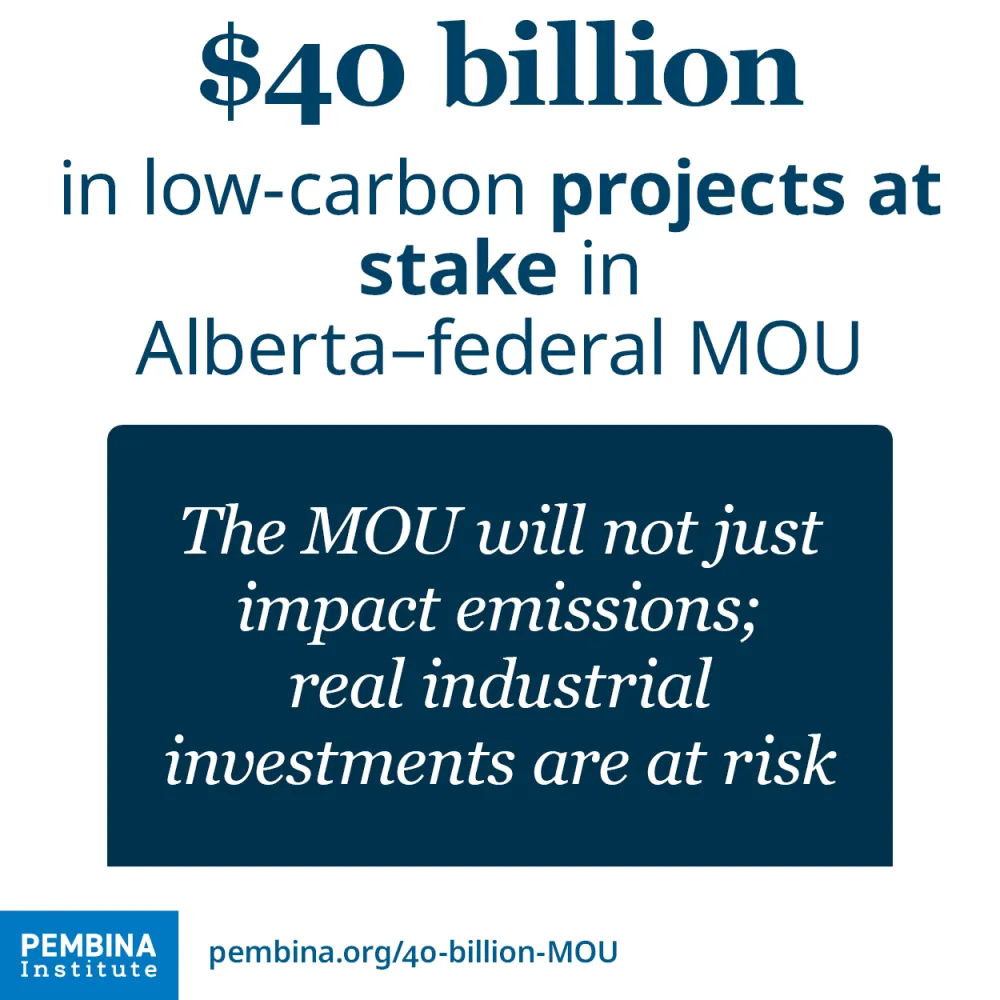
CALGARY — $40 billion of potential investment in industrial projects is at stake in Alberta, as companies wait to see the details of the negotiated agreement between the provincial and federal governments on a host of climate and energy policies, according to new analysis from the Pembina Institute.
Though the finalisation of the MOU alone will not guarantee all these projects move forward, the business case for many of them relies significantly on policies like industrial carbon pricing, rules around electricity development, or methane regulations – all of which are at play in the MOU. If tomorrow’s April 1 deadline – which was mutually agreed by Alberta and Ottawa – does not result in substantial clarity on the future of these policies, tens of billions of dollars of investment is likely to remain on pause.
Equally, MOU commitments around interprovincial electricity interties, and on a provincial program supporting carbon capture and storage projects, will impact the viability of projects.
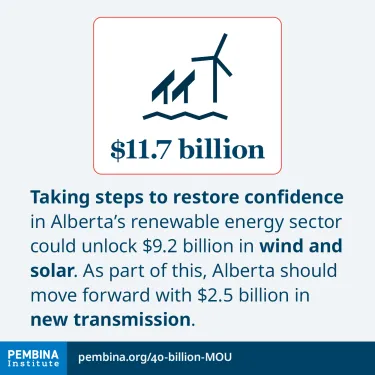
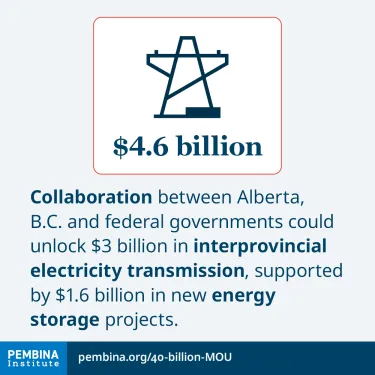
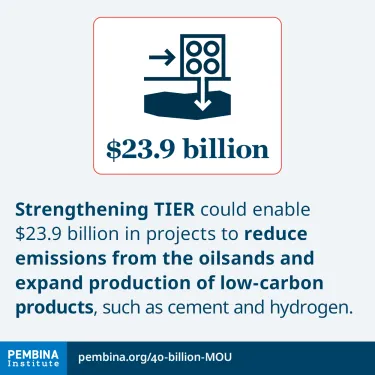
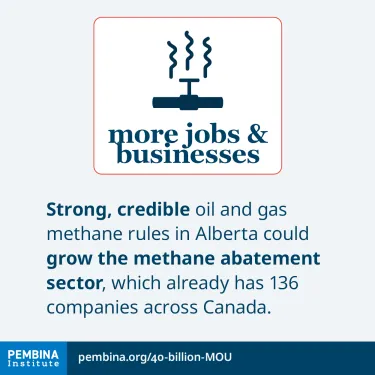
The analysis compiles a range of industrial projects, many of which were previously announced by companies but on which progress has stalled in the last couple of years, as uncertainty around the future of several federal policies has ratcheted up in Alberta. This includes, for example, a plant that would manufacture low-carbon cement, a cutting-edge waste-to-energy project, a blue hydrogen facility, and various carbon capture facilities in the oilsands.
The analysis also includes projects that the Pembina Institute would expect to move ahead if the MOU negotiations proceed positively – such as if Alberta reaches a reasonable deal with the federal government on the suspension of the Clean Electricity Regulations, in favour of the province taking tangible steps to spur renewed investor confidence in the wind and solar industry.
Further details on the methodology used for the analysis can be found in the accompanying technical backgrounder.
Quotes
“We’re talking about the industries of Alberta’s future. Projects like the Varme waste-to-power facility proposed for Alberta’s industrial heartlands, or the Heidelberg low-carbon cement plant to be built in Edmonton, are examples of the best of Albertan engineering ingenuity and entrepreneurial spirit. Similarly, removing restrictions so that private capital can once again flow into Alberta’s beleaguered wind and solar industry would reflect the free market principles of which the province has long been proud. Many of these are real projects with private investors attached, waiting to move ahead once they have certainty that their dollars are indeed wanted in Alberta. The MOU negotiation isn’t just about emissions policies – it’s about kickstarting the industrial development that will create investment, jobs and prosperity in this province for decades to come.”
— Jan Gorski, Director of Government Relations, Pembina Institute
[30]
Contact
Director, Communications
825-994-2558
Background
Article: Four crucial outcomes Canadians need from the Alberta-Ottawa MOU talks