One of Budget 2026’s most consequential long-term investments, $1.6 billion over 10 years to improve energy reliability in northern communities, has so far received little attention despite its far-reaching potential for positive impact for communities across the country’s North.
The announcement responds to a challenge that northern energy leaders – including communities, research bodies, and advocacy groups – have highlighted for decades. Namely, the need for modern and reliable energy solutions that can support economic opportunity, strengthen energy security, and give communities more control over their own energy systems.
It also acknowledges that for the federal government to meet its ambitious economic and security agenda it will need to invest in reliable northern energy systems.
For years, Northern energy infrastructure has been increasingly strained by growing demand and decades of underinvestment. More recently, this strain has become undeniable in the face of community-wide evacuations from systems failure, threats of rolling blackouts in capital cities, and the increasing cost of fuel.
At the intersection of these shortfalls are more than 200 remote communities across Canada, including every community in the territories, who remain disconnected from the North American electricity grid and rely primarily on diesel fuel to generate electricity and heat homes. This dependence creates vulnerabilities that are difficult to appreciate south of 60.
Every litre of diesel fuel must be shipped vast distances by road, barge or air, whether that’s from refineries in Canada, Asia, or elsewhere on the planet. Costs are high and increasingly volatile. Supply chains are vulnerable to disruptions. Aging infrastructure requires growing maintenance as demand for energy rises. And the pressures on these systems are only intensifying.
Northern populations are growing. Climate change is altering landscapes, transportation routes and infrastructure conditions throughout the Arctic. At the same time, both the federal government and private sector are increasing their focus on Northern development, from housing and transportation investments to critical mineral projects and defence infrastructure.
Canada is rightly devoting greater attention to Arctic sovereignty and security under uncertain geopolitical and economic conditions. But it is only now becoming clearer that strategic ambitions alone will not strengthen the North; for the government’s ambitious agenda to succeed, it will also need to invest in reliable, modern community infrastructure.
The encouraging news is that we have evidence of what works – diversified, modernized, and locally-built energy infrastructure.
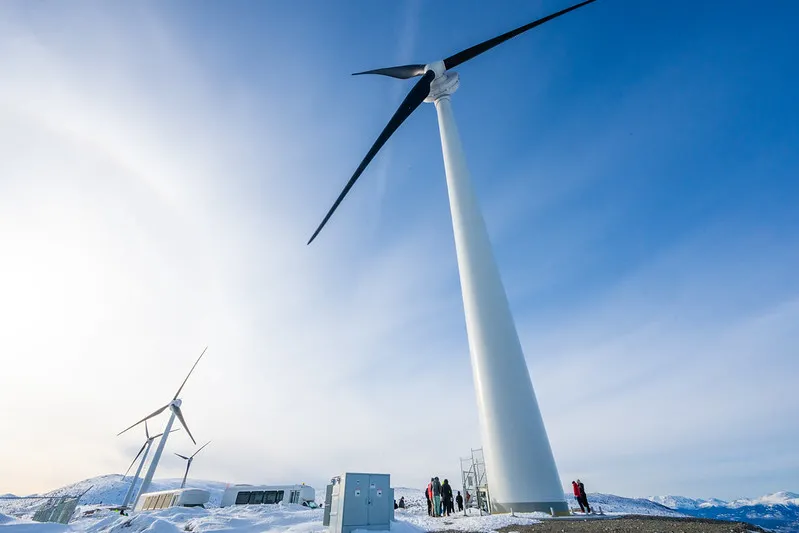
Over the past decade, Indigenous and local leaders have advocated for and built these exact solutions with the support of innovative federal programs and partners. This collaborative effort has helped communities build hundreds of clean energy projects across the country, reducing more than 142 million litres of diesel since 2016, creating good jobs, local expertise, and strengthened energy security in the process. Altogether, recent research from the Pembina Institute shows that these efforts have spurred the most significant energy transition in remote and Northern communities since the 1950s when the diesel generators were originally installed in the North.
The most successful of these projects have emerged from partnerships between communities, Indigenous leaders, northern utilities and governments working toward shared goals of energy independence, affordability, and emissions reduction. Their success demonstrates what can happen when local leadership is matched with long-term support and investment.
That is why the new funding announced in Budget 2026 presents such an important opportunity. When done in partnership, real progress can be made on difficult and seemingly entrenched infrastructure and policy issues.
But, while past programs have achieved significant success, they were also designed for a different moment, and the needs of communities and industry in remote and Northern areas of the country are changing. More than a decade after the early programs were implemented, today's energy landscape is shaped by new realities including rising costs, growing electricity demand, heightened interest in critical mineral development and increased defence investments.
Meeting these challenges will require both recapitalization of existing programs and deeply focused and collaborative work to advance the next generation or projects. Necessarily, this will require a concerted effort to address the embedded regulatory and policy fissures that continue to hold back the type of progress needed to meet this moment at pace and scale. Ultimately, this means that the next generation of federal support must be durable, flexible and shaped alongside the communities it is intended to serve.
For a budget measure that attracted relatively little attention, the stakes could hardly be higher. This is because reliable energy is not only about keeping the lights on, but also about ensuring all communities have the tools they need to build economic opportunity, resilience and prosperity. Budget 2026's investment recognizes this reality. Now comes the harder and more important task of turning that commitment into lasting results.