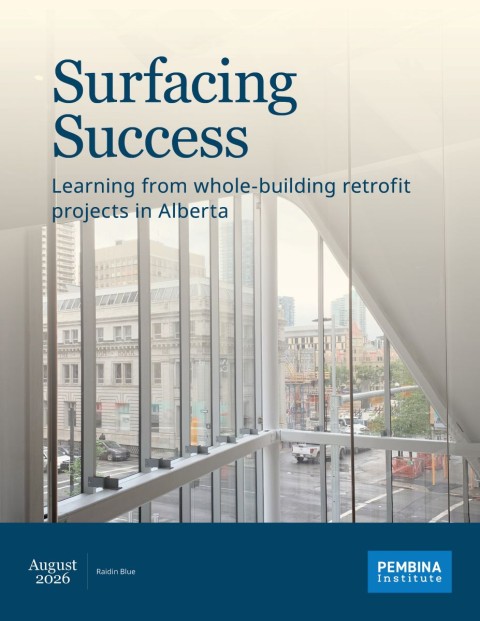
Alberta needs buildings that can withstand increasingly severe weather. Successful retrofit projects show what it takes to make existing buildings more comfortable, resilient and affordable.
A new report, Surfacing success: Learning from whole-building retrofit projects in Alberta, examines four retrofit projects and identifies the conditions needed to accelerate retrofit activity across the province.
What drives successful retrofits?
The report finds that successful projects consistently relied on four enabling conditions: timely support programs, a strong business case, skilled professionals and committed leadership. Building owners who could align financing, technical expertise and project timing were better positioned to deliver comprehensive retrofits with multiple benefits.
Growing risks, persistent barriers
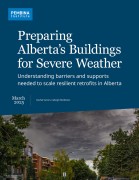
As Alberta faces rising insurance costs, volatile electricity prices and increasingly severe weather, retrofits are becoming a practical strategy for managing risk and maintaining long-term asset value.
At the same time, many building owners continue to face barriers, including limited access to financing, incentives and technical support, as well as capacity constraints across permitting, design and construction. These challenges can delay projects or prevent owners from combining energy savings, electrification and resilience improvements into a single investment.
Lessons from four Alberta projects
The four projects featured in the report demonstrate that whole-building retrofits are achievable across residential, commercial and institutional buildings. Together, they show how the right market conditions can help owners deliver upgrades that improve building performance, occupant comfort and resilience.
Building a stronger retrofit market
Looking ahead, scaling retrofit activity will require better alignment across financing, insurance and real estate markets, stronger workforce capacity and stable policy support.
Financial institutions, insurers and property appraisers can play an important role by recognizing the value of resilience-focused building upgrades in lending, insurance and valuation decisions.
What's next?
Additional findings will be released through individual case studies highlighting each project's retrofit journey and lessons learned.
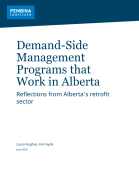
This research was funded through Alberta Ecotrust Foundation's Deep Energy Retrofit Accelerator program to identify and reduce barriers to retrofits, support emissions reductions and make building upgrades more attainable across Alberta.
Four featured Alberta projects
- Tennyson Apartments: Four-storey, 163-unit apartment complex in Edmonton, built in 2004.
- Hi-Tech Seals: Manufacturing facility in Edmonton, originally built in 1996. The retrofit included an expansion to 30,000 square feet.
- Glenbow: Eight-storey, 312,000-square-foot public art museum in downtown Calgary, originally built in the 1970s.
- Sundance Housing Co-operative: Edmonton housing complex comprising 15 buildings, including 59 townhomes, 10 duplexes and nine senior apartment suites, originally constructed in 1978.
Quick Facts
- Since 2013, Alberta has experienced five severe weather events resulting in more than $1 billion in damages and insured losses.
- More than 70 per cent of Alberta's 2050 building stock has already been built.
- Current retrofit activity occurs in less than one per cent of buildings annually.
- Alberta's pathway to net-zero residential buildings by 2050 relies on scaling retrofits to 4-5 per cent annually through a phased approach.
- An annual investment of $2.5 billion in Alberta retrofits could generate $5.8 billion in GDP each year and sustain 24,000 jobs.
- The federal government has committed to supporting the retrofit of one million homes across Canada, including through the electrification of heating and cooling systems.
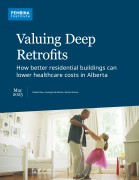
- Whole-building retrofits can reduce energy costs, improve occupant comfort and increase resilience to severe weather.

The Pembina Institute acknowledges the generous support of the Alberta Ecotrust Foundation.