Canada’s housing strategy is missing the opportunity to translate a national energy retrofit mission into a nation-building opportunity.
More than 70% of the buildings in which Canadians live and work today will still be standing in 25 years. These older homes are often more affordable to buy or rent, but increasingly costly to heat and cool, and unprepared for severe weather. Roughly 12 million existing low-rise houses in Canada must be retrofitted to maintain this housing stock and avoid adding more pressure to Canada’s housing crisis. That’s an average of 480,000 homes per year for the next 25 years, a staggering target that cannot be reached without deeper, better-sequenced retrofits.
With the recent retreat of several buildings-related policies across Canada, it is increasingly evident that the country’s housing strategy is failing — neither maintaining existing stock nor adding new stock at the pace and scale needed. These significant policy rollbacks means we are not only undermining an entire sector, but also forfeiting critical emissions reductions, high-quality jobs, and substantial economic opportunities. Even with new policies aimed at building better and faster, without support for a robust retrofit sector we are destroying more opportunities for the future than we are creating.
On their own, neither public dollars nor ad hoc investment by individual homeowners and property managers will build a robust retrofit industry. What is needed is a durable, long-term strategy that moves away from short-term government-funded incentive programs that result in cycles of boom and bust, instead embracing value-driven, market-led approaches that result in a self-sustaining, made-in-Canada retrofit industry.
We need a third way — one that brings in private investment by sharing risk, recognizes the value of resilience and demand-side energy resources, and creates sustained market demand for retrofits.
Resilience and demand-side management (DSM)
Canada’s current building stock was designed and built for a more predictable and stable climate. The Pembina Institute’s research highlights the need for retrofits to ensure our buildings can withstand changing weather conditions and lays the foundation for a retrofit business case centred on assigning value to the benefits of early action.
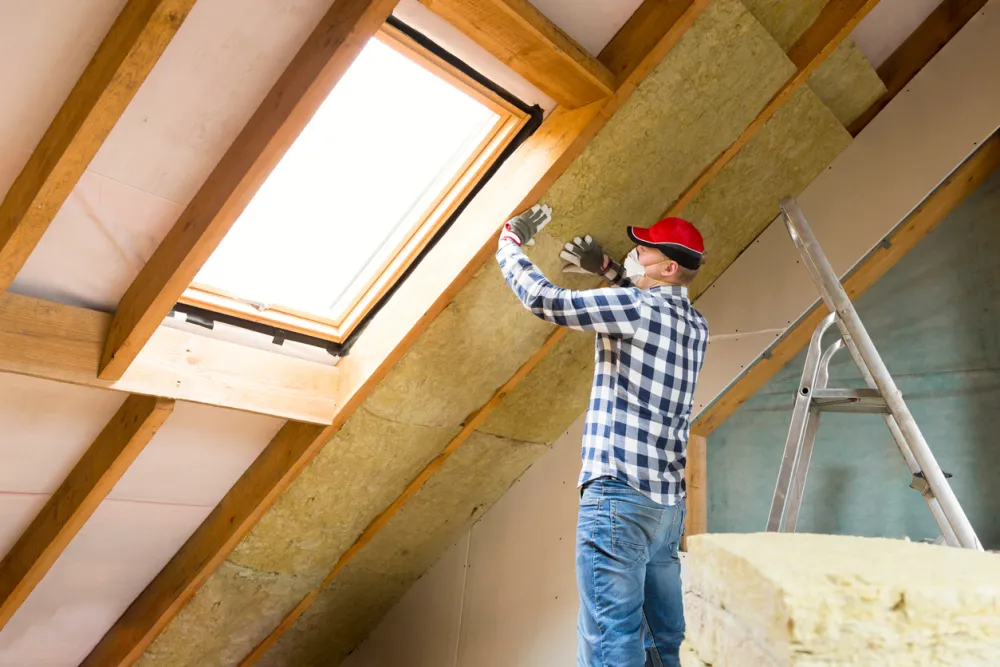
Building retrofits — such as adding adequate insulation and improving airtightness — reduce heating and cooling demand when it matters most, like during increasingly frequent heat events. These upgrades make homes more comfortable and energy-efficient while also strengthening resilience against extreme temperatures and other severe weather. Verified retrofit measures — like insulation, resilient roofing, basement flood protection, and fire-resistant materials — help protect both occupants and buildings in the event of severe weather, reducing emergency management and recovery costs and insurance claims after disasters. These upgrades ease pressure on insurers and governments, and could make coverage more accessible and affordable for both policy-holders and the public if they were effectively valued within the insurance system.
Value can also be found as building owners and occupants shift from the role of conventional, one-way consumers of electricity to actively participating in the electricity system. Utility-led demand side management (DSM) programs pair energy-efficient equipment and smart controls, as well as onsite energy resources such as rooftop solar or customer-sited batteries.
When utilities reward customers for investing in retrofits that deliver value to the utility system, DSM can help reduce financial risk for building owners and create ongoing savings for utilities and their customers. The Pembina Institute’s Beyond the Meter report shows how building on the $1.59 billion invested in DSM by utilities in 2023 supports job creation and economic growth in the retrofit sector while lowering costs for households and building owners, and delivering measurable benefits to utility system.
Made-in-Canada supply chain
Building retrofits aren’t just climate action. They’re also national security strategies that reduce our reliance on volatile global markets and increasingly fragile supply chains. Canadian-made retrofit materials — like mineral fibre insulation from seven plants nationwide — are already well positioned to leverage current domestic supply chain capacity and the potential for nation-building retrofits to strengthen supply chains, create high-quality jobs — from material processing to manufacturing, distribution, installation, and maintenance — and reduce reliance on imports.
This moment presents an opportunity for Canada to position itself as a global leader and innovator in the retrofit sector. Retrofits drive a competitive, high-performance building industry built on advanced technologies and expertise. By prioritizing trade diversification through retrofit technologies and expertise, Canada can strengthen national security while advancing clean economic growth.
Project financing
Financing tools like Property Assessed Clean Energy (PACE), on-bill financing, Clean Building Tax Credits, and Energy Performance Contracts (EPCs) can attract private investment to the retrofit sector.
PACE and other on-bill financing are a repayment approach that links the loan payment to the property rather than the household, matching responsibility for the cost of the retrofit with the recipient of the lower utility and operating costs. These programs enable home and building owners to fund energy efficiency retrofits and renewable energy upgrades through their municipal property tax or utility bill, helping reduce energy costs, improve resilience to severe weather, and advance the local retrofit market. Aligning tax credits, mortgage terms, and insurance rates to energy efficiency, resiliency, and low-carbon material standards can save owners money for decades and create beachhead markets where retrofit businesses can thrive.
EPCs, delivered by energy service companies (ESCOs), offer another proven solution: they fund upgrades upfront and get paid from guaranteed energy savings that come from lower utility bills and operating costs. The model transfers risk to the service provider and makes large-scale retrofits possible without new debt.
The bottom line
All of these possibilities make energy retrofits a nation-building opportunity. Through market-led approaches, Canada can lead the retrofit sector globally — while improving daily life, promoting energy security, and creating long-lasting economic value.
The federal Build Communities Strong Fund includes $6 billion for regionally significant projects that may include large building retrofits and climate adaptation — a promising step toward nation-building. Meanwhile, Build Canada Homes, launched in September, will begin with $13 billion to build affordable housing at scale through investments in land, modular construction technology, Buy Canada practices, and partnerships with provinces, territories, cities, investors, and builders.
The federal government can play a key role in designating funding from the Build Communities Strong Fund and Build Canada Homes to facilitate the transition to market-led value streams in the retrofit sector. Including retrofits in regionally significant projects signals their importance for nation-building. Allocating funds to engage the retrofit industry and insurance, utility, supply chain, and financial sectors creates capacity for long-term success.
Now is the moment to move beyond boom-bust cycles and toward market-led approaches that value resilience, leverage DSM, build Canadian supply chains, and attract private capital.