Amanda Bryant, senior analyst at the Pembina Institute, made the following statement in reaction to the release of updated federal methane emissions regulations today:
“Canada’s updated methane regulations are well designed and exist to further limit emissions of this powerful greenhouse gas through common sense, cost-effective technologies and procedures in the upstream oil and gas sector. These regulations are the product of an exhaustive three-year consultation with stakeholders, including the oil and gas industry and producing provinces such as Alberta.
“Unfortunately, the recent memorandum of understanding between Ottawa and Alberta – which surprisingly delayed reductions for Alberta’s oil and gas industry by five extra years – makes today’s announcement less meaningful than it would otherwise be. This is a carve-out which, according to our modelling, could result in an additional 1.9 million tonnes of methane into the atmosphere, equivalent to 53 million tonnes of carbon dioxide. That’s the same as the annual pollution from roughly half the cars on Canada’s roads.
“With this carve-out, the path forward for these new regulations in Alberta is already unclear. We therefore urge the federal government to use these new federal regulations as the yardstick against which it assesses whatever proposed pathway to reducing methane Alberta presents during the forthcoming MOU negotiations.
“As by far Canada's largest producer of oil and gas, Alberta is the province where methane regulations would have the greatest effect. The federal regulations are in line with other gas-producing jurisdictions including New Mexico and Colorado.
“British Columbia is already proving that methane can be reduced without negatively impacting the oil and gas industry. Unlike Alberta, the federal Greenhouse Gas Inventory shows that B.C. achieved its 2025 methane reduction target two years ahead of schedule, even while rapidly expanding levels of oil and gas production.
“Federal officials often trumpet the relatively low carbon intensity of B.C. LNG, but these claims are only possible as a result of strong methane regulation developed at the direction of B.C.’s provincial government. Canada cannot claim to be a “climate competitive” gas producer without holding Alberta – the nation’s largest oil and gas producer – to the same standard as the rest of the country.”
Quick facts
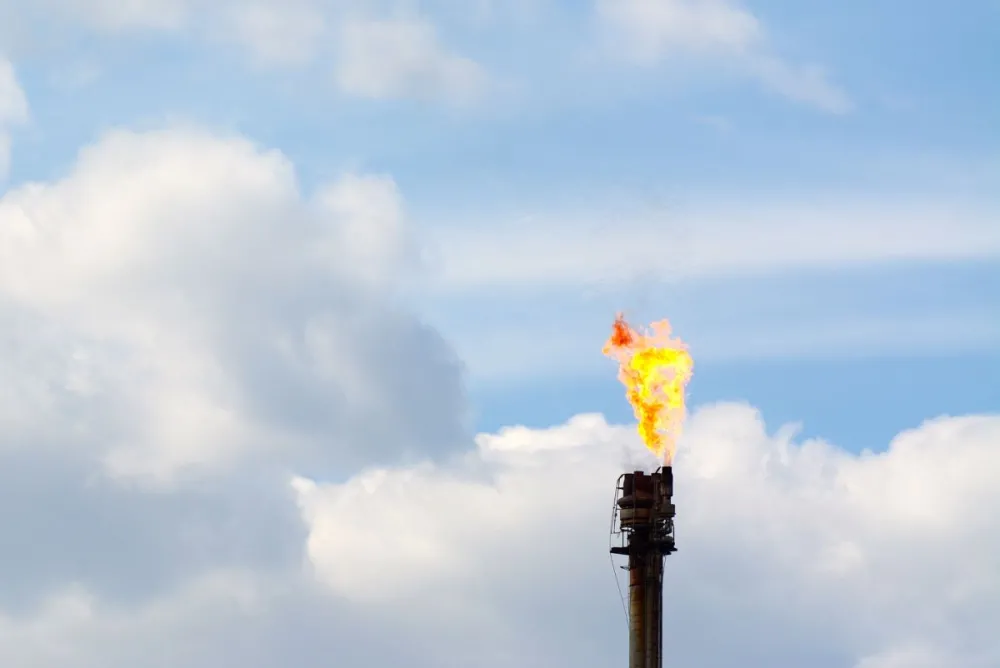
- Methane from oil and gas mainly comes from leaks and venting during production, processing, and transport—essentially when natural gas escapes instead of being captured and used.
- Canada is a co-convenor of the 2021 Global Methane Pledge, a 159-nation agreement to reduce methane emissions by 30 per cent (from 2020 levels) by 2030.
- In November 2025, Canada co-signed the Drastically Reducing Methane Emissions in Global Fossil Fuel Sector statement, which reads in part, “Proven solutions are within reach, especially in the oil and gas sector where operational practices exist to drastically cut emissions by up to 75% by 2030, providing an opportunity to lower global temperatures by 0.1°C by 2050.”
- In Canada’s baseline year of 2012, national methane emissions were 86.58 megatonnes of carbon dioxide equivalent (MtCO2e) and in Alberta’s baseline year of 2014, the province’s methane emissions were 53.09 MtCO2e, or 61 per cent of Canada’s total.
- In 2023, British Columbia had cut methane emissions from oil and gas by 51 per cent from 2014 levels, while also increasing natural gas production by more than 67 per cent.
- There are 136 methane mitigation firms either headquartered in Canada or have sites (such as manufacturing facilities, sales offices, warehouses, repair shops) located in Canada, representing good, well-paying jobs that will thrive with finalized methane regulations. Additionally, analysis finds that Canada’s proposed methane regulations could tackle methane emissions and create about 34,000 jobs.
[30]
Download a copy of Meeting the Moment: Why finalized methane regulations will be key to Canada’s climate competitiveness.
Contact
Benjamin Alldritt
Senior Communications Lead, Oil & Gas
587-328-1955
Background
Report: Raising the Bar: How targets and measurement are crucial to leadership on oil and gas methane
Blogs: No, the Ottawa-Alberta MoU is not a win on methane
BC meets its methane emissions target early