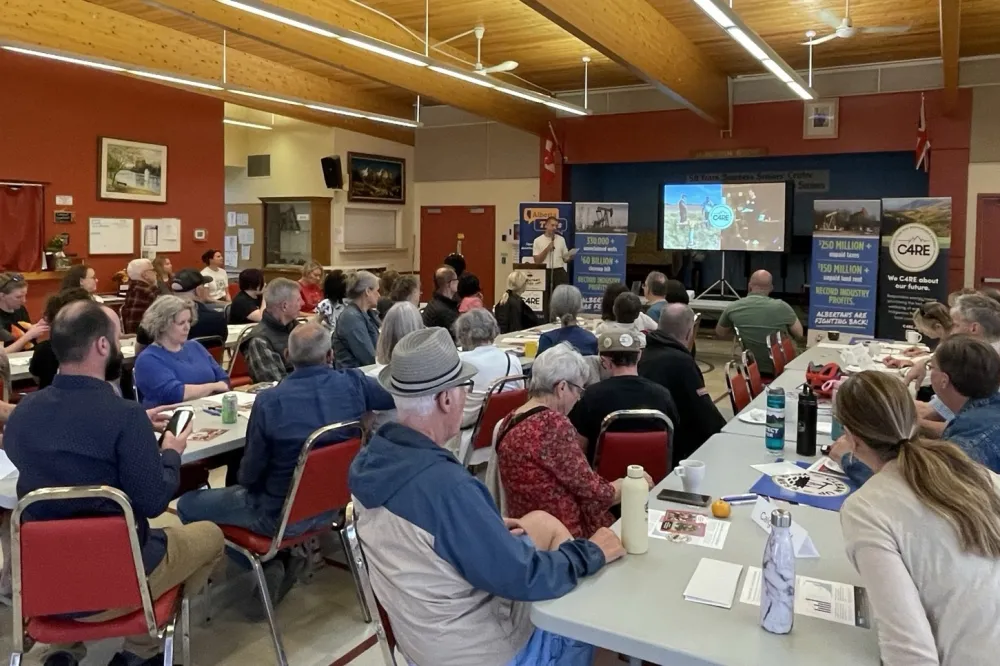
Alberta taxpayers, municipalities, and rural landowners are facing increasing costs and harms from inactive and orphaned oil and gas wells, Calgarians heard at a town hall Tuesday evening.
Co-hosted by the Pembina Institute, Alberta Environmental Network, For Our Kids and the Polluter Pay Federation, the Clean Up Your Mess town hall included expert presentations and first-hand landowner experiences of the growing oil and gas cleanup problem.
On April 9th, 2026, more than 4,000 wells and hundreds of other pieces of infrastructure were transferred to the Orphan Well Association following the closure of Long Run Exploration. This is the largest transfer to the OWA in Alberta’s history, doubling the association’s inventory overnight. Despite a 100 per cent increase in orphan wells, the levy paid by industry is rising by only seven per cent this year.
“This is clearly inadequate for the scale of the problem, and it leaves Albertans to bear the harms associated with unremediated wells near their homes and businesses,” said Janetta McKenzie, director of the oil and gas program at the Pembina Institute. “Industry funding is what drives progress on this long-standing problem, and the Orphan Well Association is persistently underfunded.”
Even before their wells are formally orphaned, some energy companies fail to pay rent to landowners, forcing Alberta taxpayers to pick up the bill. In 2024, Alberta taxpayers paid $30 million to landowners to cover delinquent lease payments.
“Leaving these aging and inactive wells for years and even decades on end with remediation causes real financial harm to all Albertans, and physical harm to landowners,” said Natalie Odd, executive director of the Alberta Environmental Network. “At best, they’re stuck with obstacles to agriculture, driving up their costs. But in many cases they face toxic contamination of their air, water, and soil from leaking wells.”
Teresa Patry, a livestock producer and farmer in the Vermilion area, has felt these harms first-hand. A video of her experiences was played at the townhall.
“I am being forced off my land and straight out of my home because if you can't breathe the air what good is the land?” said Patry. “It has been very difficult for me to give up my privacy as I have been forced to go public with this problem to hopefully save not only my family but my livelihood as well. When the regulator won't take a landowner's concerns seriously it steals a great deal from them.”
Some energy companies also fail to pay their municipal taxes. According to the Rural Municipalities Association, oil and gas companies owe more than $250 million in property taxes, money the province admits will never be recovered. On April 23, MAGA Energy was ordered to cease operations, in part due to its $260,000 in unpaid taxes to Sturgeon County.
“We must not leave the burden of oil and gas well cleanup to our children and future generations,” said Claire Kraatz, Clean Air Campaign organizer with For Our Kids. “Polluters must pay, and our regulator needs to ensure that laws are enforced. We teach our kids to clean up their messes. Why aren't oil and gas polluters cleaning up theirs?”
The provincial government’s newest plan to address this problem is laid out in the Mature Asset Strategy. The proposed approach of transferring ownership of low- and non-producing wells to special purpose entities created by the government with the hope of using some remaining production to finance the cleanup, exposes Alberta taxpayers to even greater risk. The government is expected to present the Mature Asset Strategy to the legislature in the coming weeks.
“This mess was created by industry, and industry must pay to clean it up,” said Phillip Meintzer, co-founder of the Coalition for Responsible Energy (C4RE). “If paying for cleanup with the last few barrels of production actually works, then industry can take on the risk and do it themselves. Transferring these wells into public ownership with a totally unproven concept means Alberta taxpayers will be left with the bill – yet again – if it doesn’t work.”
[30]
Contact
Benjamin Alldritt
Senior Communications Lead, Oil & Gas
587-328-1955