
CALGARY — A new report highlights key lessons from four noteworthy retrofit projects in Alberta and identifies the conditions needed to build a stronger retrofit market.
Whole-building retrofit projects in Alberta are becoming more common but continue to depend on favourable market conditions and, as Surfacing success: Learning from whole-building retrofit projects in Alberta shows, are often driven by the ambition and persistence of retrofit champions. However, as buildings are called upon to withstand more severe weather, meet evolving expectations in the finance, insurance and real estate sectors, and maintain long-term asset value, retrofits are a sound business decision.
Across Alberta, building owners face growing pressure from rising insurance costs, volatile electricity prices and increasingly severe weather. Building owners also face practical barriers when pursuing retrofit projects. Many struggle to access the right financing, incentives and technical support when major building systems reach the end of their useful life. Capacity constraints across permitting, design and construction can further delay projects or reduce project scope, causing owners to miss opportunities to combine energy savings, electrification and resilience improvements into a single investment.
The four Alberta projects featured in this report demonstrate that whole-building retrofits are achievable across residential, commercial and institutional buildings. Success was driven by four key enabling conditions: timely support programs, a strong business case, skilled professionals and committed leadership. Building owners who were able to align financing, technical expertise and project timing were better positioned to undertake comprehensive retrofits that delivered multiple benefits.
Looking ahead, scaling retrofits will depend on financing and insurance alignment, workforce capacity, and stable policy support. Financial, insurance, and real estate institutions can accelerate progress by incorporating the value of resilience-focused building upgrades into lending, insurance, and appraisal decisions.
Additional details will be released through individual case studies featuring each of the four projects and the lessons they offer for accelerating resilient, high-performance building retrofits across Alberta.
This research is funded through Alberta Ecotrust Foundation’s Deep Energy Retrofit Accelerator program. Alberta Ecotrust funded this research to identify and minimize barriers to retrofits, aiming to reduce emissions from existing buildings in Alberta and make retrofits more attainable.
Quotes
"As insurance costs rise and severe weather becomes more frequent, building owners are increasingly looking for ways to improve resilience while maintaining affordability. These case studies show that whole-building retrofits can address both challenges at once, creating healthier, more efficient and resilient buildings."
— Raidin Blue, Senior Analyst, Buildings program, Pembina Institute
— Garrett Clark, Senior Program Manager, Alberta Ecotrust Foundation
Four featured Alberta projects
- Tennyson Apartments: Four-storey, 163-unit apartment complex in Edmonton, built in 2004.
- Hi-Tech Seals: Manufacturing facility in Edmonton, originally built in 1996; the retrofit included an expansion to 30,000 square feet.
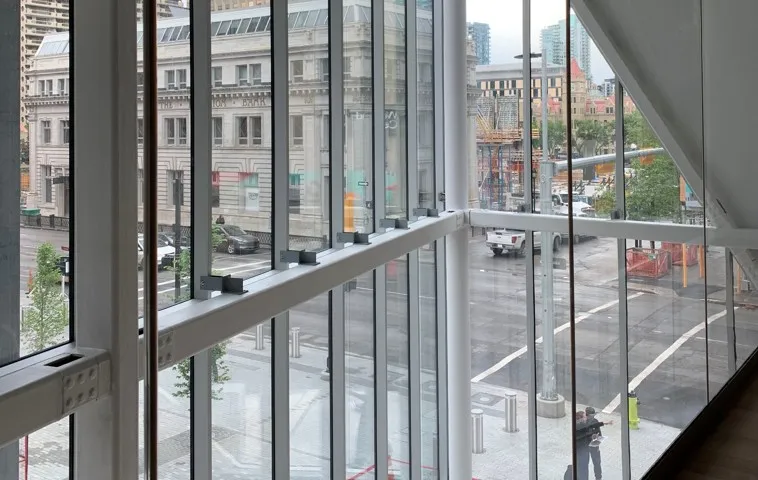
- Glenbow: Eight-storey, 312,000-square-foot public art museum in downtown Calgary, originally built in the 1970s.
- Sundance Housing Co-operative: Edmonton housing complex comprising 15 buildings — including 59 townhomes, 10 duplexes and nine senior apartment suites — originally constructed in 1978.
Quick facts
- Since 2013, Alberta has experienced five severe weather events resulting in more than $1 billion in damages and insured losses.
- More than 70 per cent of Alberta's 2050 building stock has already been built.
- Retrofit activity occurs at less than one per cent of buildings per year.
- Alberta's retrofit pathway to net-zero residential buildings by 2050 relies on scaling retrofits 4-5% annually through a phased approach.
- An annual investment of $2.5 billion in Alberta retrofits could return $5.8 billion in GDP per year and sustain 24,000 jobs.
- The federal government has committed to supporting the retrofit of one million homes across Canada, including electrifying heating and cooling systems.
- Whole-building retrofits can lower energy costs, improve occupant comfort and increase resilience to severe weather.
[30]
Contact
Sarah Snowdon
Senior Comms Lead, Pembina Institute
647-797-9329