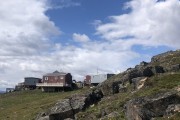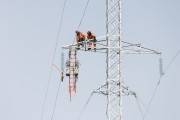
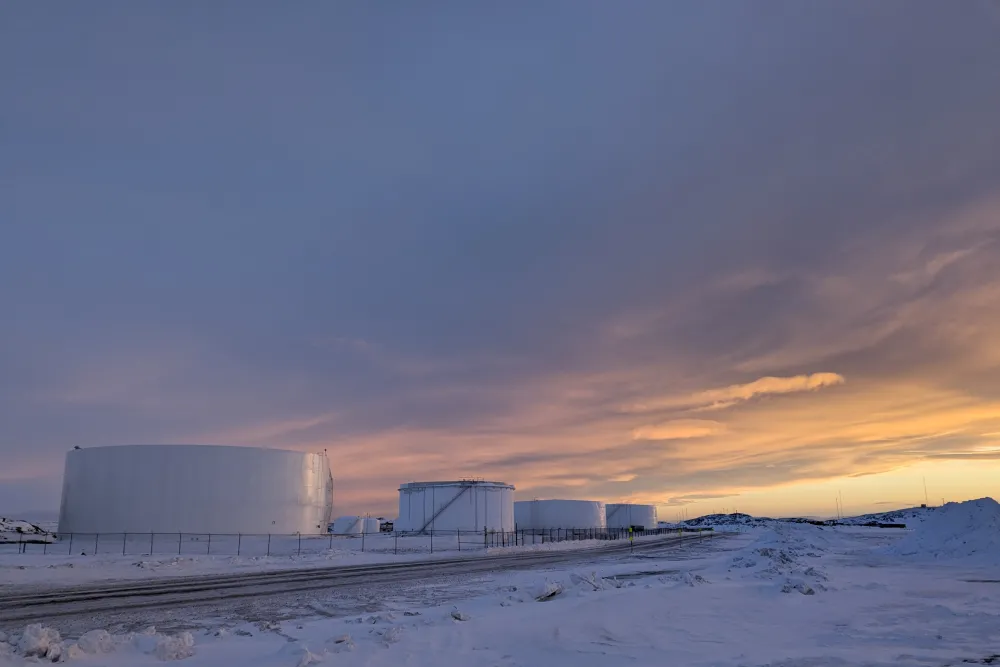
Remote community energy systems are evolving, and 2025 — a year marked by major reports, project milestones, and bold announcements — is proof of this. Yet, with a new government and economic uncertainty reshaping our collective priorities, the context for remote energy development will only continue to evolve both quickly and significantly. To reflect on what’s next, we’ve highlighted five key developments from 2025 and what they could mean for the future of clean energy in Canada’s most remote regions.
1. A renewed focus on the North
Canada’s military sector is set to receive billions of dollars in federal spending and investment in the coming years – much of which will focus on the Arctic.
With so many remote Indigenous communities spread across the Arctic, we cannot overstate the impact of growing interest in and attention to the North. But what will this mean for renewable energy and diesel reduction?
One issue we’re paying more attention to is the increasing demands on already stressed local energy systems. More military bases, training hubs, and research will require more labour and more housing. All of this will require more energy – but most northern communities (including every community in Nunavut) heavily rely on aging and inefficient diesel generators for heat and electricity. For years, urgent updates have been required to minimize inefficiencies, pollution, cost, and noise.
2026 must be the year we make real progress on the infrastructure gap and build a resilient energy future for the North.
WATCH: Want Arctic security? Nunavummiut say invest in Canada’s North (CBC News: The National)
2. Major projects and the local leaders that drive them
The federal government’s strategy for building out community and major infrastructure has, perhaps unsurprisingly, been at the top of our minds this past year. At least three proposed major projects could have significant implications for the future of diesel consumption in the Yukon and Nunavut.
One of these projects, the Iqaluit Nukkiksautit Project, has already been designated a project in the national interest and, pending regulatory approval, is projected to reduce 15 million L of diesel in Nunavut annually. As we wrote in 2025, this is a transformative project driven by a known local Inuit proponent; their work tells an important and inspiring story about the potential that comes from investing in local clean energy leadership.
From transmission lines and hydro projects to transportation and ports, we must not forget the active role that local clean energy leaders play in building healthy communities and environments. Nor can we forget the necessity of shared benefits that support thriving and healthy communities.
A growing network of local leaders are showing what it takes to meet these ambitions – now is not the time to abandon them. In 2026, we will continue to highlight the important role local leaders play in shaping efficient and beneficial energy futures for all.
3. Regulatory reform
Infrastructure and resource development present many opportunities for job creation, emissions reductions, and greater self-sufficiency – but these goals cannot be met without deepened and meaningful engagement with rights-holders.
In 2025, we released Decarbonizing Remote Indigenous Communities, a report looking at the regulatory context of remote diesel reduction in B.C. and the territories. In the report, we highlight the ways in which regulatory barriers make diesel reduction challenging for many communities.
Our research, in concert with the evolving discourse on infrastructure development, is a reinforcement of ongoing need for regulatory reform in across Canada’s energy sector. In particular, reforms aimed at supporting more collaboration between government, utilities, communities, and regulators is sorely needed.
In the year to come, continued focus and attention must be lent to addressing the regulatory gaps that stand in the way of true, reciprocal, collaboration across the energy sector. This is as true of remote energy projects as it is of major projects.
WATCH: Don't Tickety Box Me (First Nations Major Project Coalition)
4. Policy is working and more remote clean energy projects are coming online
Over the past two years, we’ve seen the completion and advancement of a number of impactful remote clean energy projects that have been decades in the making. Among others, these include the Anahim Lake Solar Project, the Innavik Hydroelectricity Project, and the Tll Yahda Solar North plant.
These developments tell us that over the past 5-10 years, important changes have been made to Canada’s policy landscape and efforts led by communities, industry, and government have made a difference. The result is that transformative projects are being built, more diesel is being reduced, and crucially, capacity for community-led and -owned clean energy development is growing.
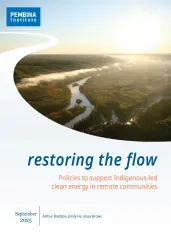
Our recent report, Restoring the flow, provides a comprehensive overview of the current state of remote energy policy in Canada. It confirms that the progress we’ve seen over the past decade is the result of both local Indigenous leadership, and innovative and effective programs and policies that have resulted in real clean energy gains in communities across the country.
The future of these effective solutions — and the speed and scope of continued progress — is, however, unclear. 2026 begins with many question marks over the future of clean energy in remote communities and how governments – federal, provincial, and territorial, view their role in advancing the progress we’ve seen over the past decade.
5. Renewables in Remote Communities Conference
In 2025, the Pembina Institute held its fourth Renewables in Remote Communities Conference in Whitehorse, Yukon. The event convened a record 375 attendees from nearly every province and territory in the country (with the exception of PEI and Nova Scotia); the highest attendance we’ve seen since we first began organizing this conference in 2015.
At the conference, we heard about intergenerational perspectives on clean energy, the ongoing need for collaboration, and the essential role of local and Indigenous leadership in improving remote energy systems. These discussions were as inspiring as they were necessary, showcasing just how dramatically the landscape for renewable energy in remote communities has changed over the years.
Across many discussions, there are new questions and answers to the challenges at the heart of clean energy in remote communities. As a new year begins, we’re reflecting on these conversations and we highly recommend you join us in doing so:
WATCH: Renewables in Remote Communities Conference 2025 (The Pembina Institute)
Conclusion
As 2026 begins, the momentum of 2025 offers both inspiration and urgency. Aging infrastructure, rising energy demands, and shifting political and economic landscapes present real challenges. But they come at the heels of more than a decade of policy and infrastructure advancement that is furthering real progress in remote communities. This past year has been a testament to this growth and a reinforcement of what’s possible when communities, governments, and industry work together. Building on that foundation now is critical to creating resilient, affordable energy systems that strengthen remote communities and advance Canada’s clean energy future.