
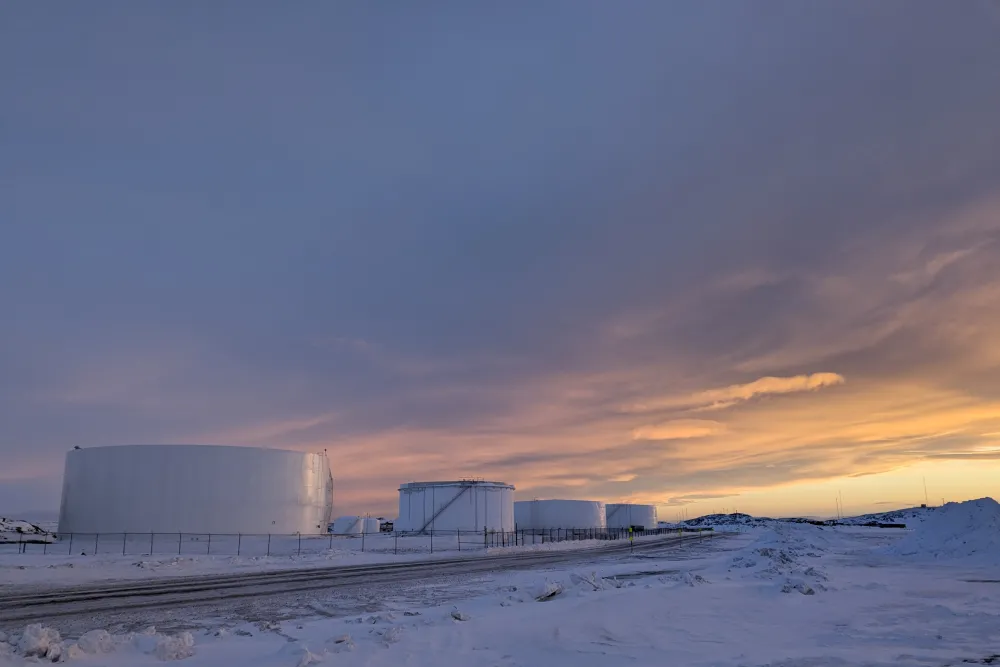
Canada is home to around 210 remote communities. For decades, these communities have been largely dependent on diesel microgrids for heat and electricity.
But our new research shows that since 2016, hundreds of clean energy projects have been built in remote communities, by remote communities and it’s leading to one of the largest decreases in remote diesel consumption in our country’s history.
Here’s what the data is showing:
Local and Indigenous leadership has been a real catalyst for change
The clean energy transition we’re witnessing is being driven by local Indigenous leaders who have been advocating for and working towards displacing diesel with clean energy for decades. Their work has largely been supported by much needed federal, provincial and territorial funding programs and policy reforms.
Our recent research shows that a decade of action has led to tangible progress on shared climate, reconciliation, and infrastructure priorities. In other words, we’re starting to see the outcomes of real investment in local leadership and it’s showing up in the form of community-owned and -led solar panels, wind turbines, and heat pumps and more — all of which are being installed at a remarkable rate.
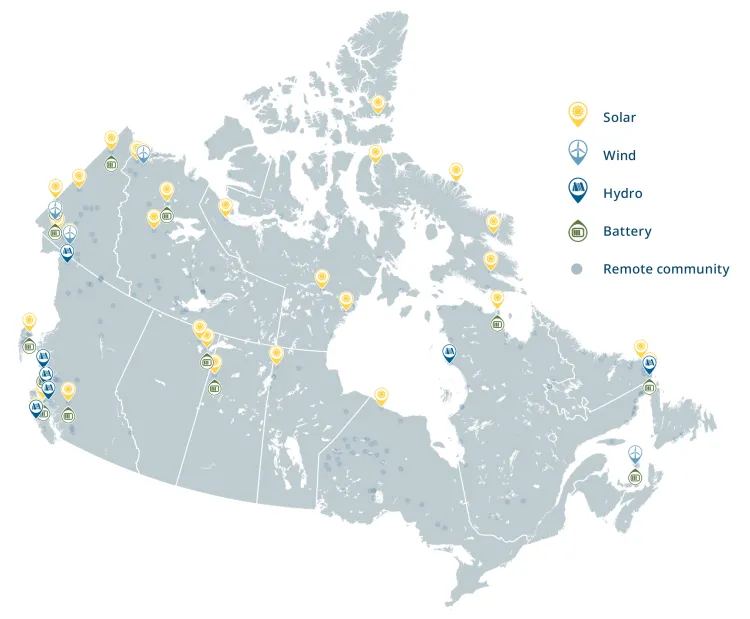
The data is telling us an important story about what happens when we remove barriers to action and support local leaders with the tools and resources they need to get the job done.
A decade of action, in numbers
Clean electricity projects in remote communities grew 20 times faster between 2016 and 2026 than the previous decade, with most of this progress (about 92%) occurring between 2020 and 2025. Almost three-quarters of clean electricity projects have been community led, with 80% of those wholly or majority Indigenous-owned.
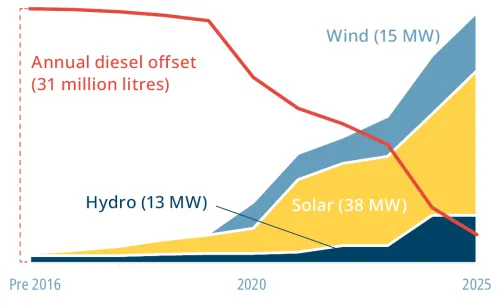
Over the past decade, communities have taken real steps toward clean power. Altogether, they now generate over 126 GWh clean energy annually. That’s enough energy to power tens of thousands of homes, with most of that electricity coming from clean, renewable sources.
Since 2016, community clean energy projects have reduced over 142 million litres of diesel — the same amount of diesel consumed in one year by all the territories combined.
Despite a decade of remarkable gains, diesel consumption is still growing
Though the past decade has seen truly remarkable progress, the work of diesel reduction and clean energy development is far from complete. Nearly 3 out of 4 remote communities still rely heavily on diesel for heat and electricity.
Energy use is also increasing. Growing populations, especially in the North, mean there’s growing demand for electricity and heating. This demand is moving fast and more people need diesel, propane, and heating oil to keep their homes warm in the winter.
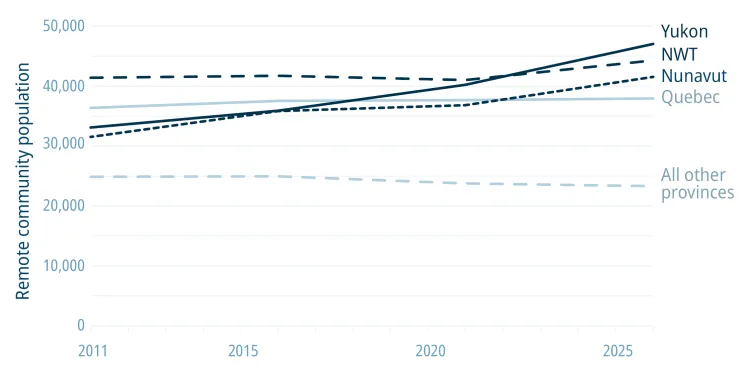
Our research shows that since 2016, annual diesel and heating oil consumption for heating and electricity has increased by 36 million litres — up from 705 million litres per year to over 730 million litres per year.
As remote communities grow, the need for clean, reliable, and affordable energy will only increase. More work and collaboration is required to address this growing issue. But the good news is that we’re not looking for new solutions — we have a decade of progress and wisdom to lead the way.
What we've learned
Strong policy paired with local leadership drives real progress. At the centre of this progress is the work, advocacy, and leadership of a growing network of Indigenous communities, technical experts, and policymakers who understand the drivers of change in remote communities.
Federal programs have played a critical role in enabling this work. However, amid shifting funding priorities, the future of these successful initiatives remains uncertain. Given both the scale of progress and the work still ahead, maintaining momentum will be essential.
Continued reductions in diesel use and expanded deployment of clean energy will require coordinated federal, territorial, and provincial policies, along with sustained investment in diesel reduction, capacity building, and knowledge sharing.
This past decade has clearly demonstrated that local leadership is essential to building stronger, more self-reliant communities. The bottom line: to maintain momentum, we need to keep investing in the people, policies, and programs that are already making a big difference.