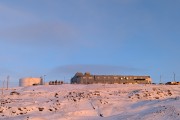
Canada is home to more than 210 remote communities, located in nearly every province and territory in the country. The reason these communities are called “remote” is because, in contrast to the rest of Canada, these communities (and the three northern territories) must produce all their electricity and heat independently from the rest of North America.
Over the past two decades, however, we’ve seen some important trends that are, for the first time, connecting remote communities to provincial electricity grids and reducing millions of litres of diesel in the process.
The growing trend toward grid connection
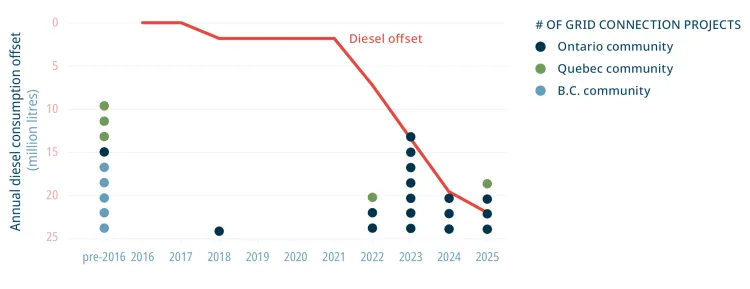
Since 2016, grid connection projects (that connect remote communities to provincial electricity grids) have displaced nearly 22 million litres of diesel use in Canada. To date this has meant that 27 formerly off-grid communities have been connected to provincial electricity systems: 5 in B.C., 17 in Ontario, and 5 in Quebec.
Why does grid connection matter?
Because remote communities are isolated from provincial electricity systems, they get their power from isolated microgrids. These microgrids are often powered by diesel fuel that is transported to the community by plane, truck, or barge and comes at a steep cost to consumers and governments.
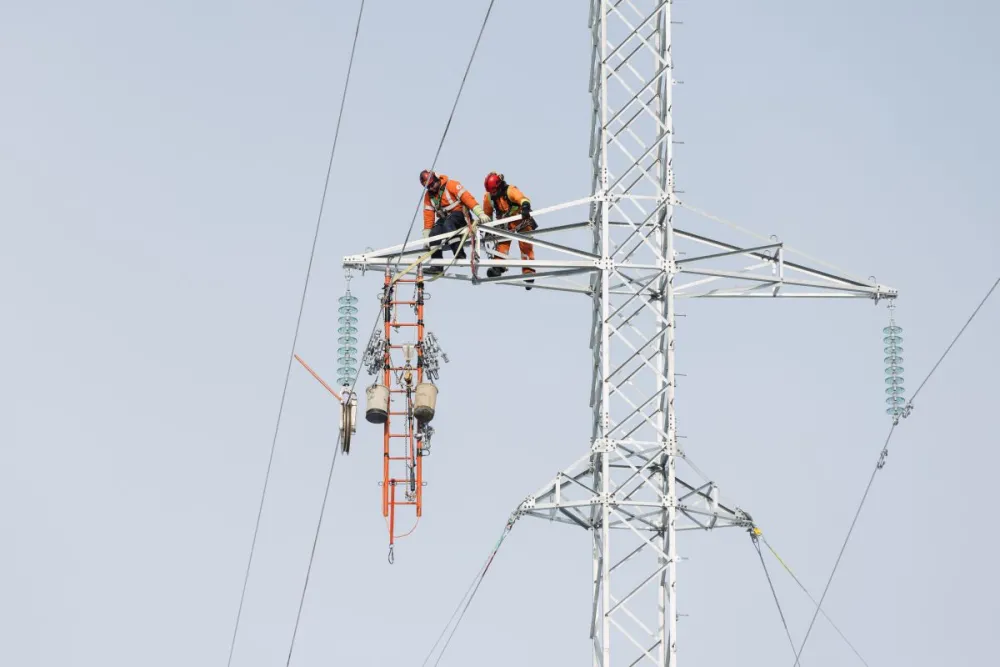
Projects to connect remote communities to the North American electrical grid reshape this system and help power communities via the same electricity system that powers larger and grid-connected cities. As a result, diesel consumption starts to go down.
Grid connection matters because it disrupts a decades long system of diesel dependency and helps create remote energy security.
These projects may also come with economic growth opportunities for Indigenous communities.
The rise of Indigenous-owned transmission lines
Recent projects such as the Wataynikaneyap Power Transmission project have been rewriting the rules about who can pursue transmission projects. All 17 of the recent grid connections in Ontario were a part of this project, which leveraged an innovative partnership between Fortis Ontario and a coalition of 24 local First Nations, who stand to benefit economically from their 51% ownership of the transmission line.
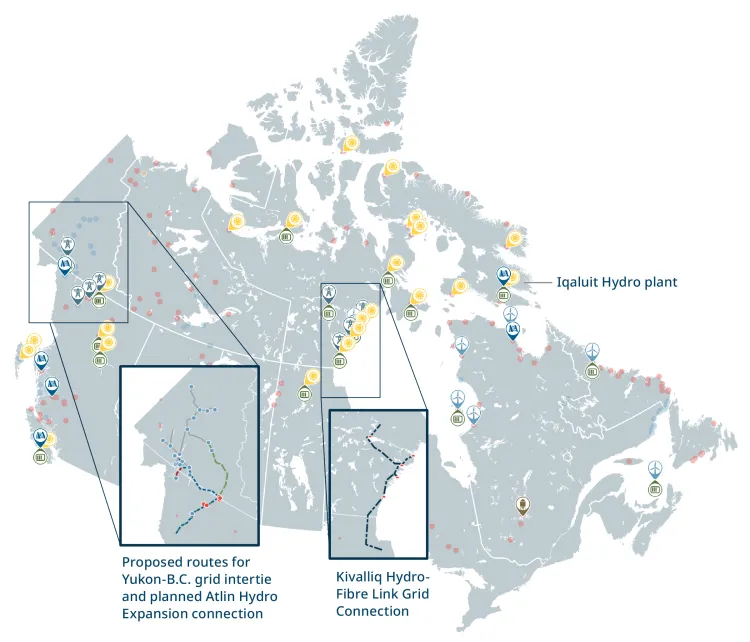
The First Nations Major Projects Corporation and the Indigenous Power Coalition have released a report investigating the changing landscape around Indigenous participating in the transmission industry, highlighting the implications for economic development, sovereignty, and energy security. Many of these lessons apply to future proposals for transmission lines such as the Yukon -B.C. grid intertie and the Kivalliq Hydro Fibre Link. grid intertie and the Kivalliq Hydro Fibre Link.
But grid connection comes with complexity
Grid connection projects are ambitious, expensive, and have a large environmental footprint as transmission lines may have to traverse vast areas of wilderness and traditional territory, so they are not the right solution for every remote community.
Furthermore, grid connection projects are not a perfect solution for energy security. Many rural Indigenous communities serviced by long transmission lines face issues with long outages and low power quality. To mitigate these issues, onsite renewables generation, storage, and or back up diesel generation are still needed to provide energy security.
While grid connection plays an important role in diesel reduction, it is most powerful when it is paired with other solutions that are focused on energy security.
Grid connection going forward
Even though remote grid-connected communities still face issues with energy security, grid connection remains one of the most effective strategies for reducing diesel consumption and can create a strong pathway towards energy security. Currently, Ontario, Manitoba, Nunavut, and the Yukon are all exploring grid connection to reduce reliance on diesel and increase the energy supply to enable community growth.
There is lots of potential that comes from grid connection projects. Grid connection projects can provide communities with ample sustainable energy that can be used to power community growth and electrification of heating and are compatible with local renewable generation.
But continued progress on grid connection relies on federal, provincial, and territorial funding and prioritization. To accomplish this work, it will be critical that provincial, territorial, and federal governments prioritize partnership and collaboration with rightsholders and communities to ensure projects deliver the most benefit with the least harm.
This blog is part of the Pembina Insitute's Diesel Reduction Progress series. Learn more: www.pembina.org/drp2