Pembina Channels:             |    Print    |    Send    |    Resize: A A A
 

Pembina Institute


Our Message to Madam Speaker

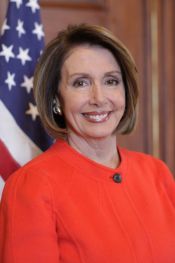
It's not every day that the third most powerful U.S. politician comes to visit Ottawa. It's even more rare when a big part of her visit focuses on a key environmental issue — the mismanagement of the oilsands. Congresswoman Nancy Pelosi's visit coincides with growing U.S. opposition to a massive oilsands pipeline called the Keystone XL, something she, the Speaker of the United States House of Representatives, is being pressured to investigate by many in her party.

We are encouraged that Speaker Pelosi and Congressman Edward Markey, Chairman of the influential Select Committee on Energy Independence and Global Warming, have chosen to reach out to environmental and First Nations representatives in addition to politicians and industry spokespeople. Congresswoman Nancy Pelosi
Our organizations, the Pembina Institute and Environmental Defence, will have an opportunity to meet with her tomorrow to put forward our perspective on how regulators in Ottawa and Edmonton are failing to do their job with regards to the environmental impacts of the oilsands industry, and what U.S. political leaders can do about it.

Our message in a nutshell will be this: The environmental problems associated with oilsands development will not improve without a signal from its largest customer — the U.S. Indeed, the Canadian government has repeatedly said that it will not lead, but merely follow the U.S. in matters of climate and energy.

Virtually every environmental indicator in the oilsands — greenhouse gas pollution, toxic waste generation, acid rain, habitat destruction and fresh water use — is getting worse because Canada and Alberta are failing to establish or enforce absolute limits on the industry.

What's worse, both levels of government engage in active denial of the impacts — such as claiming that pollution is "natural," a claim recently turned on its head by Dr. David Schindler's independent study on the Athabasca River.

In the bigger picture, oilsands development holds hostage Canadian climate policy, and diverts resources and attention away from a transition to a clean energy economy.

Canada could be a leader in a clean energy transition. With huge potential in renewable energy, it could also assist the U.S. with more exports of clean electricity. Instead, Canadian taxpayers are footing the bill for politicians to lobby against low carbon legislation in the U.S., in order to protect the oilsands industry. 

The U.S. commitment to clean energy will necessarily force them to confront the problems with oil sands, which have a significant environmental impact. Right now, the U.S. can take one step by denying the Keystone XL oilsands pipeline. Otherwise, the U.S. is tacitly saying that it condones the ongoing mismanagement of the oil sands, and Canada's role as America's dirty gas tank.

Speaker Pelosi and Congressman Markey were instrumental in getting a climate and energy bill passed in the U.S. House of Representatives. While the U.S. has not yet adopted comprehensive climate legislation, Pelosi's focus on the oilsands could serve, in the interim, as a step forward in tackling many of the same issues her legislation sought to address.

Someday our own policy makers will once again show leadership on the climate and energy files. For now though, we look to others like Speaker Pelosi to help guide us to a better future.

Rick Smith, Executive Director, Environmental Defence Canada

Marlo Raynolds, Executive Director, Pembina Institute

Roger Gagne — Sep 09, 2010 - 11:51 AM MT

Sadly, the evidence of our leader's shortsightedness and rearward view is almost never- ending.

The 2009 federal budget gave $351 million to the nuclear industry, and $850 million to carbon capture and storage, yet the 360 page document never once mentions the word "renewable". The 2010 budget was almost as dismal, restricting renewable investment to the forestry sector, and continuing the support for the nuclear and fossil fuel industries.

Here in Alberta we're giving $2 billion to CCS, and our support for solar power, biogas, and geothermal consists of ... what, exactly?

So where is the plan to wean ourselves off fossil fuels? Oh right, there is none.

Read more: http://www.calgaryherald.com/business/Stelmach+buoyed+assurances+oilsand...

Wil — Sep 08, 2010 - 09:14 PM MT

Hi Marlo,

Sadly no longer sensitive pony-tail guy (hopefully he's seen Singles otherwise will fall on deaf ears).

Simple question: historically Pembina has been in favour of the development of the oilsands (which can be seen in you calling them "oilsands") and have tried to play fair broker to other NGOs calling for their demise.

Does this statement single a shift in Pembina's policy? Are you still in favour of their development as a resource? Can you give a yes or no answer to that?

One other question. If there was legislation in the US that was targetted at lowering GHG (and say against the oilsands) but Pembina knew it was flawed and it was more say designed to be say a trade barrier against the oilsands; would Pembina be in favour or against said policy? I'm curious about what means to an end policy would you take?

Thanks (by the way, you probably shouldn't have just called Speaker Pelosi "Pelosi" in your second to last paragragh. Might want to fix that.

Marlo Raynolds — Sep 10, 2010 - 10:07 AM MT

Wil,
Thank you for your comments and questions.
With respect to The Pembina Institute’s view on the development of the oilsands, it has consistently been and remains our view that an appropriate pace and scale of oilsands development is one that recognizes and stays within clearly defined limits to the impact to air, land, water and the climate system.
My concern is we have developed the oilsands too fast and have not taken sufficient time to get the environmental science done to understand what the limits need to be set at, and put management systems in place to ensure we do not exceed those limits. I draw this conclusion because in the mid 1990s we (Alberta) set a target of development for the oilsands at 1 million barrels per day (mbpd) by 2020. At the time this was considered very ambitious. We achieved that level of production by 2003 — 17 years ahead of schedule. We thought we had 17 more years to get the environmental management systems in place to manage the growth in development and production. Today we are at approximately 1.5 mbpd with 300,000 bpd in construction. We have 1.2 mbpd of additional approved projects holding a license to start construction, and another 1.4 mbpd of projects going through the approvals process. Given that there really aren’t any radically new technologies being deployed in the projects coming on (i.e., no commercial scale application of carbon capture and storage in any of those projects holding or seeking approvals) and there are already very significant concerns about today’s level of environmental impacts (level of contaminants in the Athabasca River based on Dr. Schindler’s research; declines in caribou population; doubling of greenhouse gas emissions since 1990), I just don’t see how we can responsibly allow the proposed doubling of the oilsands to occur in the next 10 to 15 years. So I believe it is time to temporarily stop breaking any new ground and catch up on the environmental performance side.
I also think there is an economic risk of Alberta putting too many eggs in one basket. We need to ensure we have a more diversified economy and we absolutely must ensure that we are investing the wealth generated by the oilsands into a much cleaner energy future, because the rest of the world is rapidly going in that direction.
So in short, yes – we support an appropriate level of oilsands development, but we are not currently striking the right balance of economic value and environmental protection. This is the message I carried into my meeting with Speaker Pelosi.
With respect to your question about GHG policy, I am always cautious about speculating whether we would be for or against hypothetical policies. Like with so much public policy, the details really matter. We evaluate policy options using a number criterion including environmental effectiveness, transparency, economic efficiency and ease of administration. The single most important policy to put in place to drive down GHG emissions is a strong price on carbon dioxide. Until we have to pay for our pollution, we are not going to change our practices. I like policies that are performance-driven and not technology specific, allowing the market to decide how best to solve the problem. For example, a regulation to reduce the greenhouse gas emissions per kilometre driven is far better than a regulation saying all vehicles should be hybrids — set the performance we want to achieve and let engineers and entrepreneurs figure out how best to meet that performance.
Thanks again for your questions.
Marlo

Roger Gagne — Sep 08, 2010 - 12:38 PM MT

"Canadian taxpayers are footing the bill for politicians to lobby against low carbon legislation in the U.S., in order to protect the oilsands industry."

Yes, and I'd pull my hair out if it were more than 1 cm longer than Marlo's!

Sadly the weight of evidence of our Government's skewed priorities just keeps going, and going.

The 2009 federal budget gave $351 million to the nuclear industry, and some $800 million to carbon capture and storage, yet the 360 page document never once mentioned the word "renewable".

The 2010 budget was no improvement, and was met by this comment by Tim Weis at Pembina: "“We must be close to a turning point in investing in the environment, because the budget tabled today couldn't do much less."

Watch for the tide to turn in Alberta this month, however, with presentations and workshops by energy experts Hunter Lovins in Calgary, Paul Gipe in Edmonton, a well-designed solar electric pilot rebate starting up in Edmonton, a Clean Energy Tech conference in Central Alberta, and a two day Green Energy Alliance workshop in Red Deer at the end of the month.

This builds on the momentum of a dozen Cities and Towns having written letters written last year to our Provincial Government, asking for an expert panel to make a assessment of Alberta's renewable power potential, and the best policies with which to develop it.

Post new comment

We will not publish or share your email address.
CAPTCHA
In an effort to reduce spam abuse, we ask that you type the characters that you see below.
Image CAPTCHA
Enter the characters shown in the image.