The dust has settled now in the streets of Copenhagen, and the news media's focus has turned to more immediate concerns, such as the crisis in Haiti and the prorogation of Parliament.
Yet while the headlines point to these dramatic examples of the need for leadership at home and cooperation abroad, the discussion of how to effectively address climate change continues.
Each week, we'll bring you a roundup of the top climate stories and most compelling commentary.
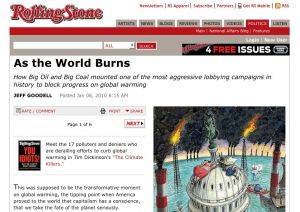 If you've been wondering just whose voices world leaders were listening to in Copenhagen, you're not alone. This week, Laura Payton of Embassy Magazine and Glen McGregor of the Ottawa Citizen take a close look at which lobbyists signed the guest book in Environment Minister Jim Prentice's office in the months leading up to the climate summit. And in the latest issue of Rolling Stone magazine, Jeff Goodell takes readers behind the political curtain to examine "how Big Oil and Big Coal mounted one of the most aggressive lobby campaigns in history" to weaken U.S. climate legislation.
Responding to a federal announcement of support for a renewable energy project in Quebec, Globe and Mail columnist Jeffrey Simpson explains why such investments don't diminish the need to put an economy-wide price on carbon.
 In the Toronto Star, Internet law expert Michael Geist takes a closer look at the government's response to the Yes Men hoax in Copenhagen, arguing that Environment Canada exaggerated the harm caused by fake government websites to have them taken offline without a court order. (Environment Canada responded with a letter to the editor.)
Simon Dyer, Director of Pembina's oilsands program, comments on a report from the Conference Board of Canada that downplays the significance of pollution from the oilsands, in a story by Lauren Krugel of the Canadian Press.
And columnist Albert Nerenberg points out in today's issue of the Montreal Gazette that tackling climate change really comes down to risk management. He narrows the potential responses down to one "responsible" choice: "do something."
 Finally, Reuters reports on an unusual legal challenge that could set a precedent in international environmental law: Micronesia is fighting plans to expand a coal plant in the Czech Republic on the grounds that the carbon it produces threatens the environment and stability of the small Pacific island state.
Think we missed something? Share links to other stories, and weigh in with your perspective in our comments section.