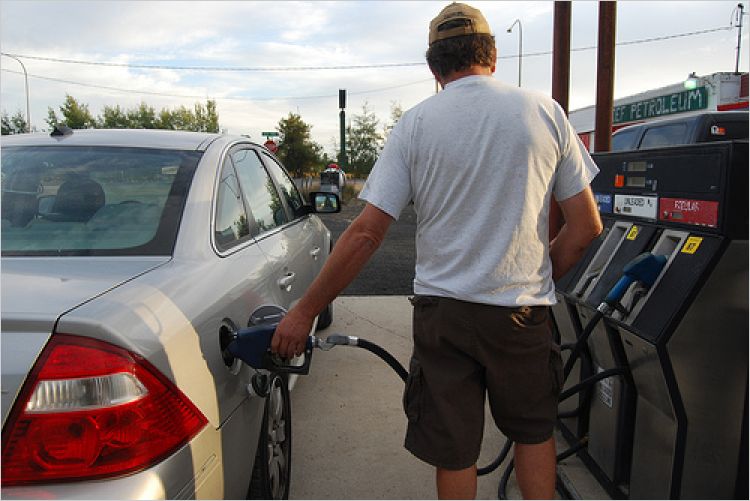
The federal government took a step forward today in curbing greenhouse gas emissions from passenger cars and trucks, announcing regulations aligned with new U.S. federal rules that will cover new cars sold from 2011 to 2016. The U.S. rules that Canada plans to align with have been strengthened by President Obama from a weak starting point proposed by President Bush.
If they go ahead as planned, the regulations will finally move Canada from a voluntary approach to greenhouse gas pollution from passenger vehicles to a mandatory one — an important step that needs to take place across the rest of Canada's economy.
Canada's passenger cars and trucks are already more efficient that the U.S.'s fleet, mainly because we tend to buy smaller vehicles here. As a result, we've always believed that there's room for Canada to move faster than the U.S., bringing down our emissions faster and leading by example. (That's exactly the approach that California has taken, and their decision to propose more ambitious regulations for their own state was a huge part of moving the U.S. federal government — and Canada's too — to a stronger standard today.)
Transportation produces just over a quarter of Canada's emissions, and roughly half of thoseemissions come from personal vehicles. That's the segment that today's announcement covers. But as we pointed out in our response, freight emissions have nearly doubled since 1990 — and today's announcement doesn't include them.
 So addressing freight is one piece of the sustainable transportation puzzle. Another one is investing in greener infrastructure, from public transit or electric vehicle infrastructure to bike lanes. There, Canada is far from keeping pace with the U.S.: President Obama's 2010 budget request includes nearly $13 billion in new sustainable transportation spending, while Ottawa's federal budget allocated no new dollars to that priority.
There was plenty of bad news for Canada's environment this week too, including the government's proposal to weaken environmental assessments or the news that a popular energy efficiency retrofit program is spent out and won't be accepting new bookings. But it's nice to head out for a long weekend knowing that Canada and the U.S. are at least starting to tackle this piece of the climate challenge.

Clare Demerse was the director of federal policy at the Pembina Institute until 2014.